Area 51: How Cold War Spy Planes Created America’s Greatest UFO Mystery
For sixty years, Area 51 remained America’s most famous non-existent military installation. The government’s official position was simple: no comment. But in 2013, after decades of speculation, conspiracy theories, and Hollywood dramatizations, the CIA finally acknowledged what aviation historians and UFO researchers had long suspected—Area 51 was real, and it was responsible for launching the modern UFO phenomenon.
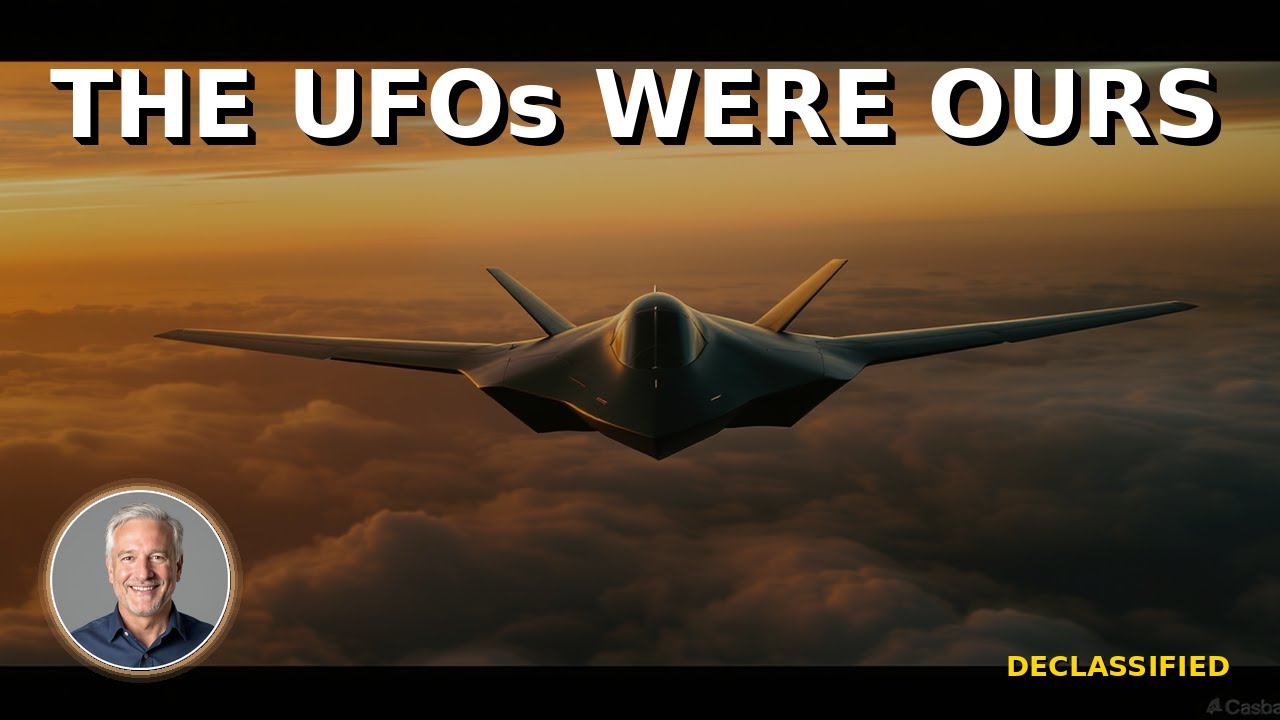
The declassified documents, all 407 pages of them, revealed a remarkable truth: over half of all UFO sightings reported between 1955 and 1969 were actually classified CIA aircraft flying at altitudes previously thought impossible. What makes this revelation even more extraordinary is that the CIA actively encouraged the alien interpretation rather than risk exposing their secret aviation programs.
The Birth of America’s Most Secret Airbase
The story begins in 1954, when CIA officer Richard Bissell faced an urgent national security challenge. The Soviet Union had developed nuclear weapons, but American intelligence knew virtually nothing about their capabilities, production facilities, or military installations. Traditional reconnaissance methods—human spies and modified bombers—were proving inadequate and dangerous. The downing of several American aircraft over Soviet territory had made it clear that a new approach was desperately needed.
Bissell’s solution was revolutionary: develop an aircraft that could fly so high that Soviet interceptors and surface-to-air missiles couldn’t touch it. This aircraft would become the U-2 spy plane, but first, Bissell needed somewhere to build and test it away from prying eyes.
Working with Lockheed’s legendary aircraft designer Kelly Johnson, Bissell identified a remote dry lake bed in Nevada called Groom Lake. The site was already within the Atomic Energy Commission’s Nevada Test Site, providing an existing security perimeter. On April 12, 1955, President Dwight Eisenhower approved the establishment of this secret facility, though it wouldn’t be called Area 51 for years—that designation came from the Atomic Energy Commission’s numbering system for parcels of land.
The U-2: Flying Where No Aircraft Had Gone Before
Kelly Johnson’s Skunk Works division in Burbank, California, designed the U-2 to cruise at 70,000 feet—more than 20,000 feet higher than any operational aircraft of the era. To achieve this altitude, Johnson’s team created something that was part airplane, part glider. The U-2 had extraordinarily long wings, a lightweight structure, and could carry enough fuel to fly for ten hours.
The first U-2 prototype arrived at Groom Lake in July 1955, transported in pieces and reassembled in a hangar that would become the template for Area 51’s distinctive architecture. Test flights began immediately, with pilots pushing the aircraft to altitudes that civilian and military air traffic controllers had never encountered.
Commercial airlines in the 1950s typically flew between 10,000 and 20,000 feet. Military jets occasionally reached 40,000 feet. But here was an aircraft routinely operating at 70,000 feet, appearing as a bright metallic disk when sunlight hit its aluminum fuselage and long wings. At that altitude, the U-2 would catch the sun’s rays even when observers on the ground were experiencing dusk or dawn, making the aircraft appear to glow against the darker sky.
The UFO Connection: An Unexpected Cover Story
The timing couldn’t have been more perfect for creating a UFO phenomenon. The modern concept of “flying saucers” had emerged in 1947 with Kenneth Arnold’s sighting near Mount Rainier and the alleged Roswell incident. By the mid-1950s, public interest in extraterrestrial visitors was growing, fueled by science fiction movies and Cold War anxieties about threats from above.
When reports of mysterious high-altitude objects began flooding into the Air Force’s Project Blue Book—the official UFO investigation program—analysts quickly realized many descriptions matched U-2 flight patterns and schedules. The aircraft’s unusual appearance, impossible altitude, and secret nature created perfect conditions for misidentification.
Rather than debunk these reports with the truth, the CIA made a calculated decision: let people believe in aliens. As journalist Annie Jacobsen revealed in her groundbreaking research on Area 51, CIA officials determined that UFO explanations were far preferable to having the public—and Soviet intelligence—learn about America’s spy plane capabilities.
This decision had profound consequences. Project Blue Book investigators were told to dismiss U-2-related sightings as “natural phenomena” or “weather balloons,” explanations that satisfied neither witnesses nor the public. The perceived government cover-up of UFO incidents actually was a cover-up, just not the kind that believers imagined.
Beyond the U-2: Decades of Secret Aircraft Development
Area 51’s mission expanded far beyond the U-2 program. Throughout the 1960s and 1970s, the facility became America’s premier testing ground for classified aircraft. The A-12 Oxcart, predecessor to the famous SR-71 Blackbird, conducted its maiden flight from Groom Lake in 1962. This aircraft was even more exotic than the U-2, capable of flying at Mach 3.3 and designed with early stealth characteristics.
In the 1970s and 1980s, Area 51 became the birthplace of modern stealth technology. The Have Blue technology demonstrator, which led to the F-117 Nighthawk stealth fighter, underwent extensive testing at the facility. Each new aircraft brought fresh UFO reports as observers witnessed flight characteristics that defied conventional understanding of aviation.
The F-117, with its angular, diamond-shaped design, looked unlike any conventional aircraft. During night flights, its unusual profile and nearly silent operation generated reports of triangular UFOs moving at impossible speeds. Once again, the Air Force neither confirmed nor denied these sightings, allowing UFO researchers to draw their own conclusions.
The Human Cost of Secrecy
The obsession with secrecy at Area 51 extended beyond protecting aircraft designs. Workers at the facility were required to sign extensive non-disclosure agreements and faced severe penalties for discussing their work. This secrecy culture had tragic consequences that wouldn’t be fully understood for decades.
During the 1980s, Area 51 workers were regularly exposed to toxic materials from aircraft testing and waste disposal. When several employees developed rare cancers and other health problems, they found themselves unable to seek legal recourse because acknowledging their illness would require revealing classified information about their work location and duties.
The families of workers who died from these exposures faced a cruel irony: they couldn’t prove their loved ones’ illnesses were work-related without violating national security laws. It would take years of advocacy and congressional pressure before these workers received any recognition or compensation for their sacrifices.
The 2013 Revelation and Its Implications
The CIA’s 2013 release of previously classified documents marked a watershed moment in both UFO research and government transparency. For the first time, an official U.S. government agency acknowledged that Area 51 existed and confirmed its role in creating UFO mythology.
The documents revealed specific details about U-2 operations, including flight schedules that corresponded precisely with major UFO flaps of the 1950s and 1960s. They also confirmed that the CIA had deliberately allowed UFO explanations to proliferate rather than risk exposing classified programs.
This revelation forced a reevaluation of the entire modern UFO phenomenon. While it didn’t explain every reported sighting, it demonstrated that a significant portion of UFO history was actually classified aviation history. The truth turned out to be just as extraordinary as the fiction, though in a different way than believers had imagined.
Modern Relevance: Lessons from Area 51’s Secret History
The Area 51 story offers crucial insights into how government secrecy shapes public perception and conspiracy theories. By refusing to provide rational explanations for unusual sightings, authorities inadvertently fueled decades of speculation about extraterrestrial visitation.
This pattern continues today. Modern UFO sightings—now termed Unidentified Aerial Phenomena (UAP) by the military—likely include observations of current classified aircraft programs. The Pentagon’s recent acknowledgment of UAP encounters may represent a more transparent approach, but the fundamental tension between national security and public curiosity remains unchanged.
The Area 51 declassification also demonstrates the eventual limits of government secrecy. Technologies that required absolute protection in the 1950s became acceptable for public discussion by 2013. This suggests that today’s most sensitive classified programs will likely be revealed within our lifetimes, offering future historians the same kind of retrospective clarity we now have about Cold War aviation programs.
Perhaps most importantly, the Area 51 story reminds us that truth can indeed be stranger than fiction. The real history of secret aircraft development, Cold War espionage, and government decision-making proves just as compelling as any alien visitation narrative—and has the added advantage of being documented fact rather than hopeful speculation.