The Great Boston Molasses Flood: When Industrial Greed Turned Sweet into Deadly
On a deceptively mild January afternoon in 1919, Boston’s North End experienced one of the most bizarre and devastating industrial disasters in American history. What began as a routine day in this bustling immigrant neighborhood ended with twenty-one dead, 150 injured, and an entire community forever changed by a wave of molasses moving faster than most people could run.
The Great Boston Molasses Flood, as it came to be known, wasn’t just a freak accident—it was the inevitable result of corporate negligence, regulatory failure, and the dangerous intersection of Prohibition-era economics with immigrant community vulnerability. The disaster would ultimately reshape American industrial law and establish legal precedents that protect workers and communities to this day.
The Perfect Storm of 1919 Boston
The North End of Boston in 1919 was a vibrant tapestry of Italian, Irish, and Eastern European immigrant families. Tenements lined narrow streets where children played between pushcarts and women hung laundry from fire escapes. At the heart of this neighborhood stood an imposing steel tank, 50 feet tall and 90 feet in diameter, owned by the United States Industrial Alcohol Company.
This wasn’t just any storage facility. The tank held 2.3 million gallons of crude molasses, a key ingredient in manufacturing industrial alcohol—and with Prohibition looming, the company was racing to produce as much alcohol as possible before the constitutional amendment took effect. The financial pressure was immense, and corners were being cut everywhere.
Arthur Jell, the company’s treasurer, had personally overseen the tank’s construction in 1915. Despite having no engineering background, Jell approved a design that used steel plates too thin for the massive structure and rivets that were improperly secured. Local residents had complained for years about the tank leaking, leaving sticky brown streams in the streets, but their concerns were dismissed.
The Day Physics Became Fatal
January 15, 1919, dawned unusually warm for a Boston winter. Temperatures rose from 2°F to 43°F in just a few hours—a critical detail that investigators would later identify as the final trigger. As the molasses warmed, it expanded, creating pressure that the already-compromised tank simply couldn’t contain.
At approximately 12:30 PM, Isaac Gonzales was working his shift at the nearby Boston Elevated Railway when he heard what witnesses described as a sound “like machine gun fire.” The rivets holding the tank’s steel plates were failing in rapid succession. Within seconds, the entire northern wall of the tank burst open.
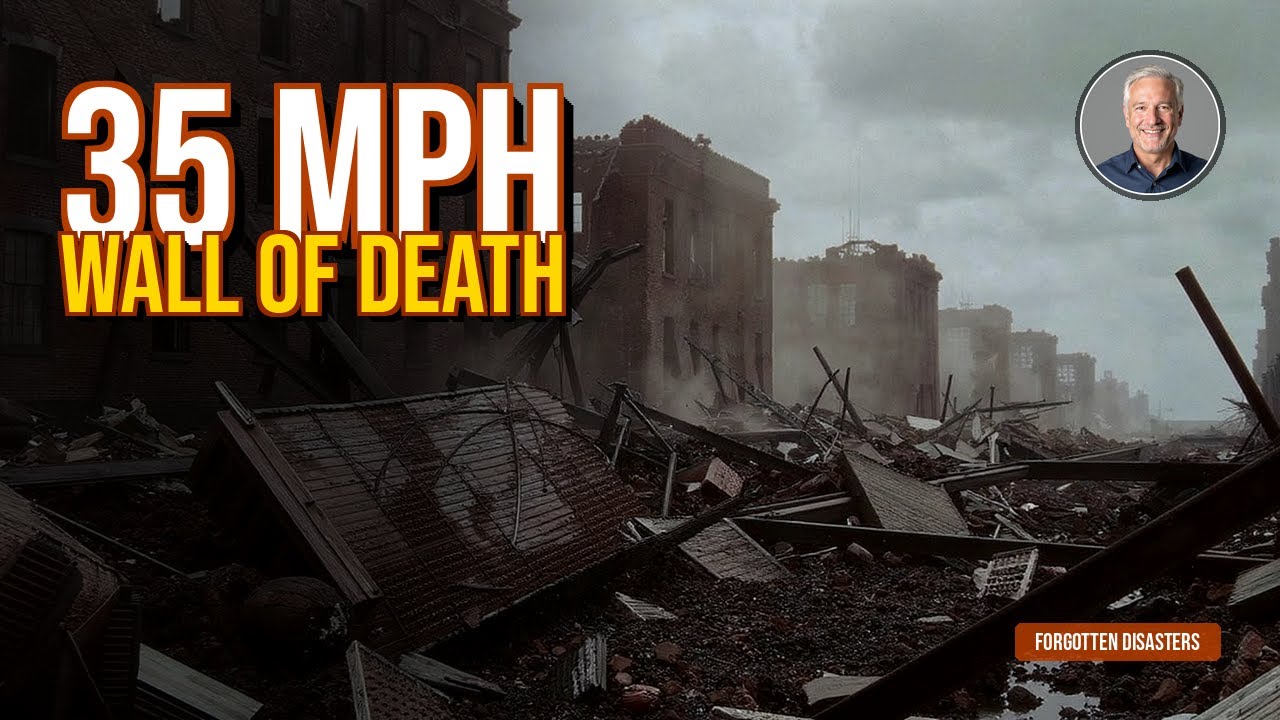
The physics of what happened next defied most people’s understanding of molasses as a slow-moving substance. Two and a half million gallons of sticky syrup, weighing over 13,000 tons, erupted in a wave that reached 25 feet high at its peak. The initial surge moved at an estimated 35 miles per hour—fast enough to crush buildings, flip over a truck, and knock an elevated train off its tracks.
Damon Hall, a city worker who survived the disaster, later testified that the wave “picked up everything in its path like it was nothing.” The molasses didn’t just flow—it destroyed with the force of a tsunami, trapping victims in its sticky embrace as it cooled and thickened around them.
The Human Cost of Corporate Negligence
The victims of the molasses flood represented a cross-section of working-class Boston. They included firefighters responding to the initial emergency, workers at nearby businesses, children walking home from school, and residents who simply happened to be in the wrong place at the wrong time.
Maria Distasio, age 10, was crushed while collecting firewood with her sister. Antonio di Stasio (no relation despite the similar name) was working at his cobbler’s shop when the wave hit. Patrick Breen, a laborer, drowned in molasses while trying to help other victims. Each death told a story of ordinary people caught in an extraordinary disaster caused by extraordinary corporate irresponsibility.
The rescue efforts were unprecedented and heartbreaking. Boston firefighters, police, and volunteers worked for days to free victims trapped in the hardening molasses. They used steam engines to soften the sticky mass and saws to cut through debris. Some victims were found days later, preserved in the molasses but long dead from suffocation or crushing injuries.
The cleanup took weeks. Workers used salt water to dissolve the molasses, but traces of the disaster lingered in the North End for decades. Local residents claimed they could smell molasses on hot summer days well into the 1960s.
Legal Revolution in the Aftermath
The lawsuits that followed the Great Molasses Flood transformed American industrial law. For six grueling years, lawyers battled over a fundamental question: Could a company be held liable for disaster caused by faulty construction if they claimed it was an “act of God”?
United States Industrial Alcohol Company initially argued that the unseasonably warm weather was an unforeseeable natural disaster that relieved them of responsibility. They even suggested that anarchists had bombed the tank, despite having no evidence to support this claim.
However, the victims’ families, many represented by lawyers working pro bono for the immigrant community, methodically documented the tank’s design flaws. They proved that Arthur Jell had ignored multiple engineering warnings, used substandard materials, and never properly tested the structure’s integrity.
The legal precedent established in 1925 was revolutionary: corporations could be held strictly liable for damages caused by negligent construction and maintenance of industrial facilities. This ruling became the foundation for modern product liability law and workplace safety regulations.
The Prohibition Connection
The molasses flood cannot be understood without considering its connection to Prohibition. The 18th Amendment, ratified just one day after the disaster, created enormous pressure on alcohol producers to maximize production before the ban took effect. This economic urgency directly contributed to the unsafe conditions that led to the tank failure.
The United States Industrial Alcohol Company was racing against time, storing unprecedented amounts of molasses to convert into industrial alcohol. The company’s financial motivation to maintain continuous production meant they couldn’t afford to shut down the tank for proper safety inspections, even when leaks became obvious to everyone in the neighborhood.
This intersection of regulatory change and industrial pressure created a perfect storm of negligence—one that immigrant communities bore the brunt of, as they so often did in early 20th-century America.
Echoes in Modern Industrial Safety
The Great Boston Molasses Flood established principles that continue to shape industrial safety regulation today. The disaster highlighted how corporate cost-cutting in immigrant and working-class neighborhoods could have catastrophic consequences, a pattern that unfortunately continues in modern industrial accidents.
The legal precedents established in the molasses flood litigation directly influenced later landmark cases involving industrial disasters, from the Texas City Refinery explosion of 1947 to more recent chemical plant failures. The principle that companies cannot escape liability for negligent design and construction by claiming natural causes remains a cornerstone of American tort law.
Perhaps most importantly, the disaster demonstrated how regulatory gaps and enforcement failures disproportionately impact vulnerable communities. The residents of Boston’s North End had complained about the leaking tank for years, but their concerns were ignored until tragedy struck. This pattern—of industrial hazards being concentrated in low-income, immigrant, or minority neighborhoods—remains a persistent challenge in American environmental and industrial policy.
Today, as we grapple with aging infrastructure, climate change, and continued industrial accidents, the lessons of January 15, 1919, remain painfully relevant. The Great Boston Molasses Flood stands as a reminder that industrial progress without proper safety measures and community accountability isn’t progress at all—it’s a disaster waiting to happen.
The twenty-one victims of the molasses flood didn’t die in vain if their tragedy continues to inform how we balance industrial development with community safety. Their legacy lives on in every building code, safety regulation, and corporate liability law that protects ordinary people from extraordinary corporate negligence.