The General Slocum Disaster: When New York Lost 1,031 Lives to Corporate Negligence
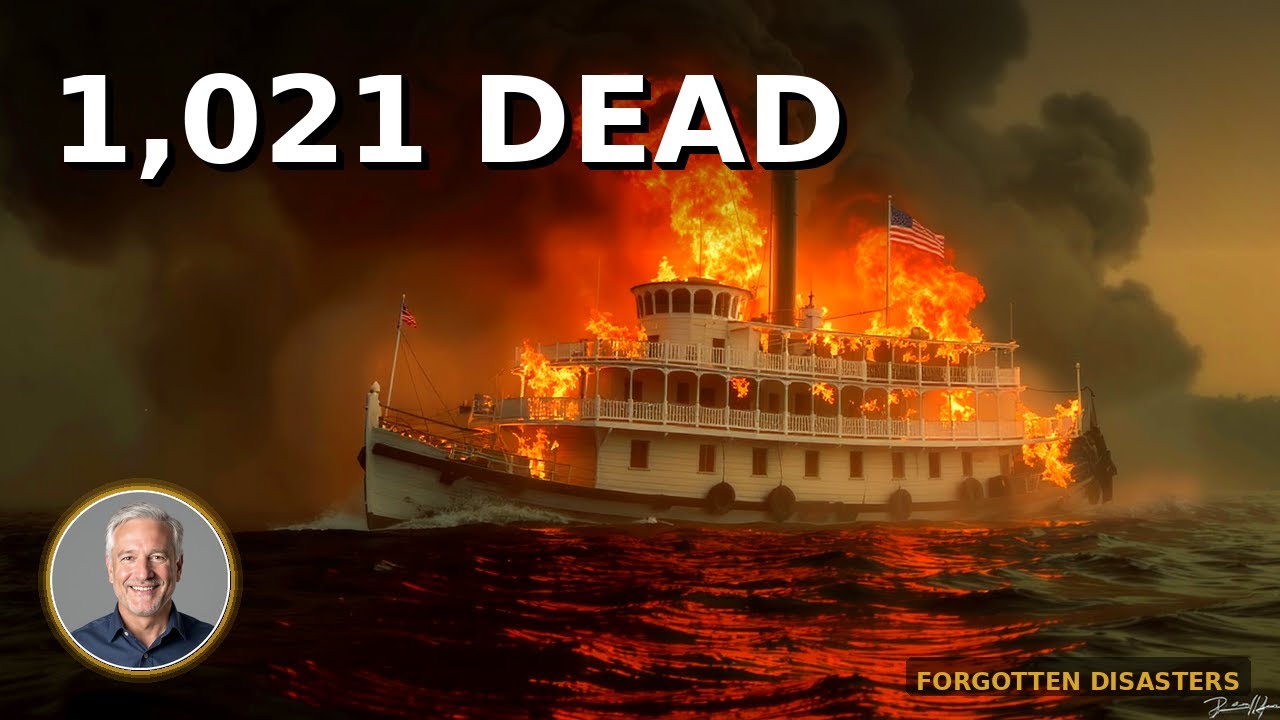
On a sunny Wednesday morning in June 1904, the steamboat General Slocum transformed from a symbol of immigrant prosperity into a floating crematorium. Within minutes, 1,031 passengers—mostly German-American women and children—perished in what remains New York City’s deadliest peacetime disaster before September 11, 2001.
The tragedy that unfolded on June 15, 1904, wasn’t an act of terrorism or natural catastrophe. It was the predictable result of systematic negligence, corner-cutting, and regulatory failure that had festered for years. The General Slocum disaster offers a sobering lesson about what happens when profit margins matter more than human lives—and why some tragedies fade from collective memory while others endure.
The Rotted Life Jackets That Became Death Traps
Perhaps no single detail captures the criminal negligence aboard the General Slocum better than its safety equipment. The ship’s life jackets, required by federal law and regularly inspected by government officials, were filled with cheap granulated cork that had rotted into powder over thirteen years of neglect.
When terrified passengers strapped on these life jackets and leaped into the East River, the cork crumbled instantly. Instead of providing buoyancy, the waterlogged canvas dragged victims underwater. Survivors reported watching children disappear beneath the surface within seconds of jumping, their “safety” equipment transformed into anchors.
The life preservers weren’t the only fatal deception. Fire hoses burst when crew members attempted to use them, their canvas rotted beyond function. The lifeboats were painted to the deck and couldn’t be lowered. Fire extinguishers contained nothing but water. Every piece of safety equipment aboard the General Slocum was theatrical prop—impressive during inspections, useless during crisis.
A Community Celebration Becomes Mass Tragedy
The General Slocum wasn’t carrying strangers on that fatal morning. Nearly all 1,358 passengers belonged to St. Mark’s Evangelical Lutheran Church in Kleindeutschland (Little Germany), Manhattan’s vibrant German immigrant neighborhood. They were embarking on the congregation’s 17th annual picnic to Locust Grove on Long Island—a cherished tradition celebrating their community’s prosperity in America.
Reverend George Haas had organized the excursion with typical German efficiency, chartering the popular steamboat for $350. The passenger manifest read like a neighborhood directory: mothers with their children, elderly church members, teenage friends traveling together. Most of the men remained in Manhattan to work, planning to join their families later in the day.
This demographic composition proved catastrophic. When fire broke out in the ship’s forward compartment around 10:00 AM, the vessel carried primarily women wearing heavy Victorian-era dresses and children who couldn’t swim. The East River’s strong current and 70-degree water temperature left little margin for survival.
Captain Van Schaick’s Fatal Decision
Captain William Van Schaick faced a crucial choice when crew members reported the fire: beach the burning vessel immediately on nearby shores, or continue toward his destination hoping to outrun the flames. His decision would determine whether the General Slocum disaster entered history as a close call or mass tragedy.
Van Schaick, a 30-year veteran of the East River route, chose to maintain full speed ahead. He later claimed he feared creating panic and wanted to reach North Brother Island, where the ship’s hospital could treat burn victims. Critics argued he was protecting the Knickerbocker Steamboat Company’s property, knowing that beaching would destroy the vessel.
The captain’s decision proved catastrophic. The ship’s forward momentum fanned the flames, transforming the General Slocum into a 235-foot torch racing up the East River at 15 knots. By the time Van Schaick finally beached on North Brother Island, the fire had consumed most of the vessel. Passengers faced an impossible choice: burn alive or drown in the river.
The Knickerbocker Steamboat Company’s Criminal Negligence
The General Slocum’s safety failures weren’t oversights—they were the predictable result of systematic cost-cutting by the Knickerbocker Steamboat Company and its president, John J. Pease. Federal investigators discovered that the company had ignored safety regulations for over a decade while federal inspectors rubber-stamped their certifications.
The vessel’s last federal inspection occurred just weeks before the disaster. Inspector Henry Lundberg certified the General Slocum as “in good condition” despite obvious deficiencies. The cork in life jackets crumbled to powder when squeezed. Fire hoses showed visible rot. Crew members couldn’t demonstrate proper fire drill procedures.
These weren’t subtle defects requiring expert analysis. A New York World reporter later demonstrated that the life jackets wouldn’t support a five-pound weight in water. The criminal negligence was so obvious that federal prosecutors charged both Pease and Van Schaick with manslaughter—though only the captain ultimately served prison time.
Mary McCann: The Heroic Exception
While most General Slocum crew members abandoned their posts, 17-year-old Mary McCann became the disaster’s unlikely hero. Working as a porter on the ship, McCann remained at her station distributing life jackets to panicked passengers even as flames engulfed the vessel.
McCann’s actions saved dozens of lives, but she couldn’t overcome the life jackets’ fatal design. Witnesses reported seeing her help children and elderly passengers into the defective preservers, unaware she was sentencing them to drowning. McCann herself barely survived, suffering severe burns before escaping into the river.
Her heroism highlighted the disaster’s cruel irony: individual courage couldn’t compensate for institutional negligence. The General Slocum carried several crew members who risked their lives attempting rescues, but their bravery was undermined by equipment that had been allowed to rot for over a decade.
The Death of Kleindeutschland
The General Slocum disaster didn’t just claim 1,031 lives—it destroyed an entire community. Kleindeutschland lost so many residents that the neighborhood ceased to exist as a cultural entity. Families who survived couldn’t bear remaining in a place haunted by such devastating loss.
The mathematics of grief were staggering. Some families lost every female member across three generations. St. Mark’s Lutheran Church saw its congregation decimated—entire pews of familiar faces simply vanished. The community’s careful social networks, built over decades of immigration and settlement, collapsed in a single morning.
Within years, surviving German-Americans had scattered to other New York neighborhoods or left the city entirely. The thriving immigrant community that had sustained dozens of German-language newspapers, restaurants, and cultural organizations became a ghost town. The Lower East Side’s character shifted permanently as new immigrant groups filled the vacuum left by Kleindeutschland’s destruction.
Reform Measures That Came Too Late
The General Slocum disaster finally triggered maritime safety reforms that could have prevented the tragedy if implemented years earlier. Federal investigators mandated improved life jacket designs, regular equipment testing, and crew training requirements. The ramshackle inspection system that had certified obviously defective ships underwent complete reorganization.
New regulations required life preservers to use solid cork blocks rather than granulated cork that could deteriorate. Fire safety equipment faced rigorous testing rather than visual inspection. Ship crews had to demonstrate competency in emergency procedures rather than simply claiming they had received training.
These reforms saved countless lives on subsequent vessels, but they represented a bitter victory for General Slocum survivors. Mary McCann, who testified before federal investigators, lived to see maritime safety transformed—but she also lived with the knowledge that 1,031 deaths could have been prevented by enforcing existing regulations.
Why America Forgot Its Worst Maritime Disaster
The General Slocum disaster killed more New Yorkers than the September 11 attacks, yet most Americans have never heard of the tragedy. This collective amnesia reflects several historical factors that determined which disasters enter national memory and which fade into obscurity.
The victims’ identity as German immigrants made their suffering less compelling to mainstream American media. While newspaper coverage was extensive in 1904, the story lacked the broader national resonance that keeps tragedies alive across generations. The disaster also competed for historical attention with the 1906 San Francisco earthquake and other major events of the Progressive Era.
Perhaps most significantly, the General Slocum sank during an era when industrial accidents and safety failures were routine rather than exceptional. The Triangle Shirtwaist Fire, the Iroquois Theater Fire, and similar disasters created a crowded field of corporate negligence tragedies. Americans became almost numb to stories of preventable deaths caused by corner-cutting and regulatory failure.
Lessons for Modern Safety Culture
The General Slocum disaster offers sobering insights for contemporary safety culture. The tragedy demonstrates how regulatory capture—when government inspectors become too cozy with the industries they oversee—can transform oversight into theater. The same dynamics that allowed obviously defective life jackets to pass federal inspection continue to threaten public safety today.
The disaster also illustrates how safety failures typically result from accumulated negligence rather than single catastrophic decisions. The General Slocum’s problems were visible and well-documented years before the fire. The tragedy was entirely preventable if existing laws had been enforced and basic maintenance performed.
Most importantly, the General Slocum reminds us that disaster victims aren’t statistics—they’re communities, families, and individuals whose losses ripple across generations. The German-American families who perished that June morning had survived the challenges of immigration, built successful lives in America, and were celebrating their community’s prosperity when corporate negligence claimed their lives.
Their memory deserves better than historical footnote status. The General Slocum disaster stands as a permanent warning about what happens when profit margins matter more than human lives—and why vigilant safety oversight remains essential for protecting the communities we serve.