The New London School Explosion: How a Quest for Free Gas Became America’s Deadliest School Disaster
On the afternoon of March 18, 1937, shop teacher Lemmie R. Butler flipped the switch on an electric sander at the New London Consolidated School in East Texas. In that instant, 295 children and teachers perished in what remains the deadliest school disaster in American history. The explosion was so catastrophic that Adolf Hitler sent a personal telegram of condolence to the grieving community—one of the few times the Nazi leader expressed sympathy to Americans during the 1930s.
The tragedy wasn’t an accident of nature or an unforeseeable calamity. It was the direct result of a school board’s decision to abandon their commercial gas contract in favor of tapping into a raw, unprocessed natural gas pipeline to heat their state-of-the-art facility. They wanted free fuel. Instead, they created a death trap that would forever change how America handles natural gas safety.
The False Economy of “Free” Natural Gas
The New London Consolidated School was a monument to oil boom prosperity. Built in 1932 at the then-staggering cost of $300,000, the ultra-modern facility boasted amenities that most schools could only dream of: a gymnasium with a swimming pool, modern laboratories, and comprehensive vocational workshops. The building served as the crown jewel of a community transformed by the East Texas Oil Field discovery in 1930.
However, even oil-rich communities felt the pinch of the Great Depression. In 1934, the school board made a fateful decision under the leadership of superintendent W.C. Shaw. Rather than continuing to pay United Gas Company approximately $300 monthly for processed natural gas, they would tap directly into the Parade Gasoline Company’s waste gas line—a raw pipeline that carried unprocessed natural gas, a byproduct of oil extraction that companies typically burned off or vented.
This wasn’t technically theft, but rather a common practice throughout the East Texas oil region. Hundreds of homes, businesses, and institutions connected to these waste gas lines with tacit approval from oil companies, who saw it as preferable to simply flaring off the excess gas. The arrangement saved the school district roughly $3,600 annually—equivalent to about $75,000 today.
The Invisible Killer: Odorless Natural Gas
The fatal flaw in this cost-saving measure lay in the fundamental difference between commercial and raw natural gas. United Gas Company added mercaptan—a sulfur compound with a distinctive “rotten egg” smell—to their processed gas as a safety measure. Raw gas from the waste line carried no such additive. It was completely odorless.
For nearly three years, this invisible danger accumulated in the crawl space beneath the New London school. The waste gas line, never intended for institutional use, developed numerous leaks. Natural gas, being lighter than air, rose through the building’s foundation and collected in enclosed spaces. Students and teachers went about their daily routines, completely unaware that they were working above a massive bomb.
Weather conditions on March 18, 1937, created the perfect storm. A high-pressure system had moved through East Texas, causing barometric pressure changes that affected gas flow and accumulation. By mid-afternoon, the concentration of natural gas beneath the school had reached explosive levels—somewhere between 5 and 15 percent of the air mixture, the optimal range for a natural gas explosion.
3:17 PM: The Moment Everything Changed
Lemmie R. Butler had no way of knowing that his routine use of an electric sander would trigger a catastrophe. The tool’s motor produced a small electrical spark—the kind generated thousands of times daily in industrial and educational settings. Under normal circumstances, it would have been utterly harmless.
The explosion was instantaneous and devastating. Witnesses described a sound like thunder, followed by the sight of the massive school building lifting entirely off its foundation before collapsing into rubble. The blast was heard 40 miles away and registered on seismographs at Southern Methodist University in Dallas.
Young Walter Cronkite, then a 20-year-old journalist working for a small radio station in Kansas City, was among the first reporters to arrive on scene. His coverage of the disaster would later be cited as formative in developing his approach to breaking news journalism. Cronkite described scenes of parents frantically digging through debris with their bare hands, and the heartbreaking sight of small bodies laid out in neat rows as rescue workers struggled to identify victims.
The Scope of Tragedy
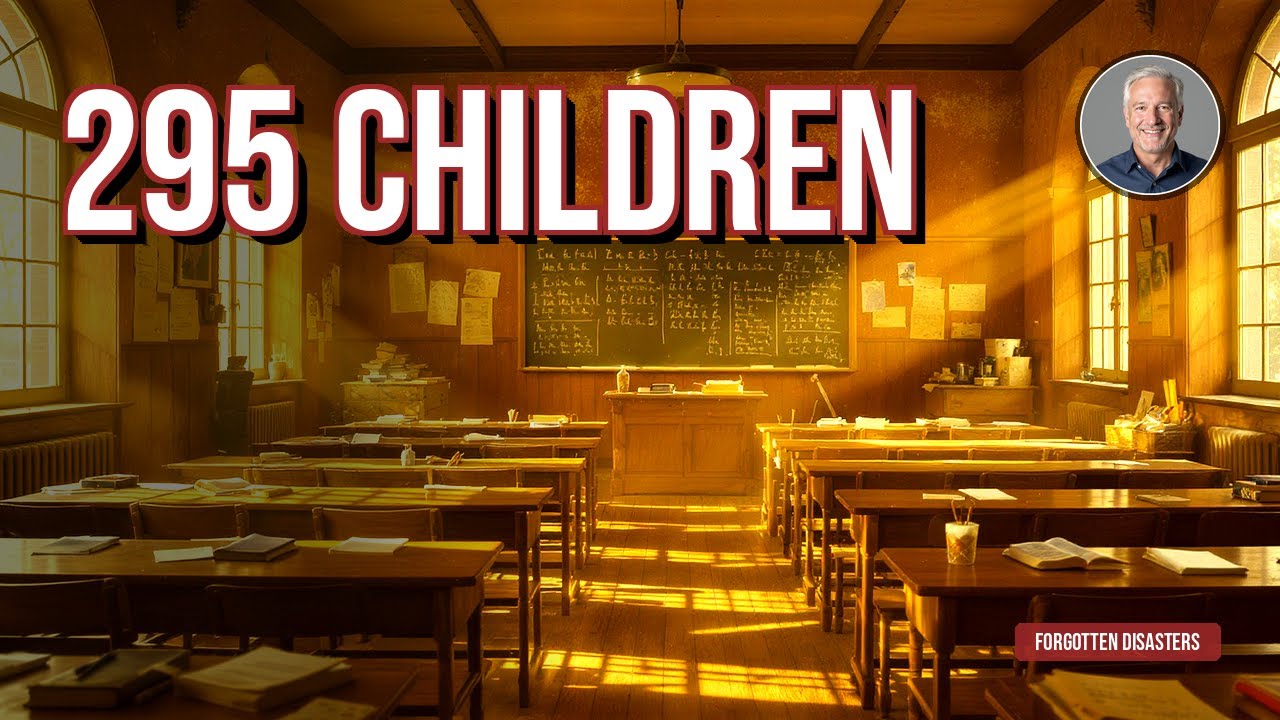
The human cost was staggering. Of the approximately 500 students and 40 teachers in the building at the time of the explosion, 295 died instantly or shortly thereafter. Another 300 were injured. The dead included children as young as six years old and as old as 18, along with several beloved teachers and staff members.
The community’s response revealed both the close-knit nature of 1930s rural Texas and the oil boom’s social complexity. Some families lost multiple children in the explosion. Others saw their only child perish. The local hospital was overwhelmed, and emergency medical personnel came from as far away as Dallas and Houston to assist.
Perhaps most tragically, the disaster struck families who had recently moved to New London specifically for the superior educational opportunities offered by the consolidated school. The very feature that had drawn them to the community—the modern, well-equipped school building—became the source of unimaginable grief.
National Response and Safety Revolution
News of the New London disaster shocked the nation and prompted immediate action at both state and federal levels. Within weeks of the explosion, the Texas Legislature passed the first law in the United States requiring the odorization of natural gas. Other states quickly followed suit, and by 1940, odorization had become standard practice throughout the American natural gas industry.
The specific chemical chosen for this purpose was mercaptan—the same sulfur compound that commercial gas companies like United Gas had already been using. Mercaptan is added in tiny quantities (just a few parts per million) but produces a smell so distinctive that most people can detect a gas leak at concentrations well below dangerous levels.
This safety innovation represents one of the most direct cause-and-effect relationships between a single disaster and a life-saving technological standard. Every time Americans smell gas and take appropriate safety measures, they benefit from a regulation written in the blood of the New London children.
Corporate Accountability and Legal Aftermath
The question of responsibility for the New London explosion proved legally complex. While the school board had made the decision to use waste gas, oil companies had tacitly encouraged the practice throughout the region. Parade Gasoline Company and other firms knew their waste lines were being tapped by local institutions but had never taken steps to prevent it or warn of the dangers.
Civil lawsuits against the oil companies produced mixed results. Some families received settlements, but many were left without adequate compensation. The legal concept of corporate negligence in safety matters was still developing in 1937, and proving that oil companies should have foreseen the danger proved challenging given the widespread nature of waste gas use throughout East Texas.
Superintendent W.C. Shaw, who had supported the switch to waste gas, survived the explosion but lived with the burden of the decision for the rest of his life. The school board members who had voted for the cost-saving measure faced intense community scrutiny, though most were not held legally liable.
The Broader Context of 1930s Safety Culture
The New London disaster occurred during an era when industrial safety standards were far less developed than today. The 1930s marked a turning point in American attitudes toward corporate responsibility for public safety, partly driven by high-profile disasters like New London.
The explosion also highlighted the unique challenges of oil boom communities. East Texas in the 1930s was experiencing rapid growth and technological change, with new industrial processes and infrastructure being implemented faster than safety protocols could be developed. The waste gas that killed the New London children was itself a byproduct of an industry that was revolutionizing American energy production.
Moreover, the disaster occurred during the Great Depression, when cost-cutting measures often took precedence over safety considerations. The school board’s decision to switch to free waste gas reflected the financial pressures facing even relatively prosperous communities during this period.
Lessons for Modern Safety Culture
The New London explosion offers enduring lessons about the relationship between cost-cutting and safety. The school board’s attempt to save $300 monthly resulted in a tragedy that no amount of money could undo. This pattern—where small savings create enormous risks—continues to appear in modern safety failures across various industries.
The disaster also demonstrates how technological solutions can emerge from tragedy. Mercaptan odorization was a relatively simple innovation that has prevented countless gas-related accidents over the past 85 years. The chemical additive costs pennies but has saved thousands of lives by making gas leaks immediately detectable.
Perhaps most importantly, New London illustrates how regulatory responses to disasters can create lasting positive change. The natural gas odorization laws passed after 1937 remain in effect today, protecting every American who uses natural gas in their homes, schools, and businesses.
The 295 children and teachers who died in New London paid an unimaginable price for a lesson about safety that has benefited generations of Americans. Their tragedy reminds us that in matters of public safety, the cheapest option is rarely the safest—and the true cost of cutting corners may not be apparent until it’s too late to undo the damage.