Nevada’s Atomic Tourism and Hidden Controversies: The Untold Stories Behind the Silver State
When most Americans think of Nevada history, images of gold rushes, cowboys, and neon-lit casinos come to mind. But beneath the surface of the Silver State lies a far more complex and often troubling narrative—one involving atomic cocktails served during nuclear detonations, billion-dollar hermits, and government cover-ups that shaped the American West in ways textbooks rarely acknowledge.
Between 1928 and 1992, Nevada became a testing ground not just for nuclear weapons, but for some of the most audacious experiments in American society, economics, and federal power. The state’s unique position as a sparsely populated federal territory made it the perfect laboratory for activities that would have been impossible anywhere else in the nation.
The Atomic Playground: When Nuclear Tourism Was Born
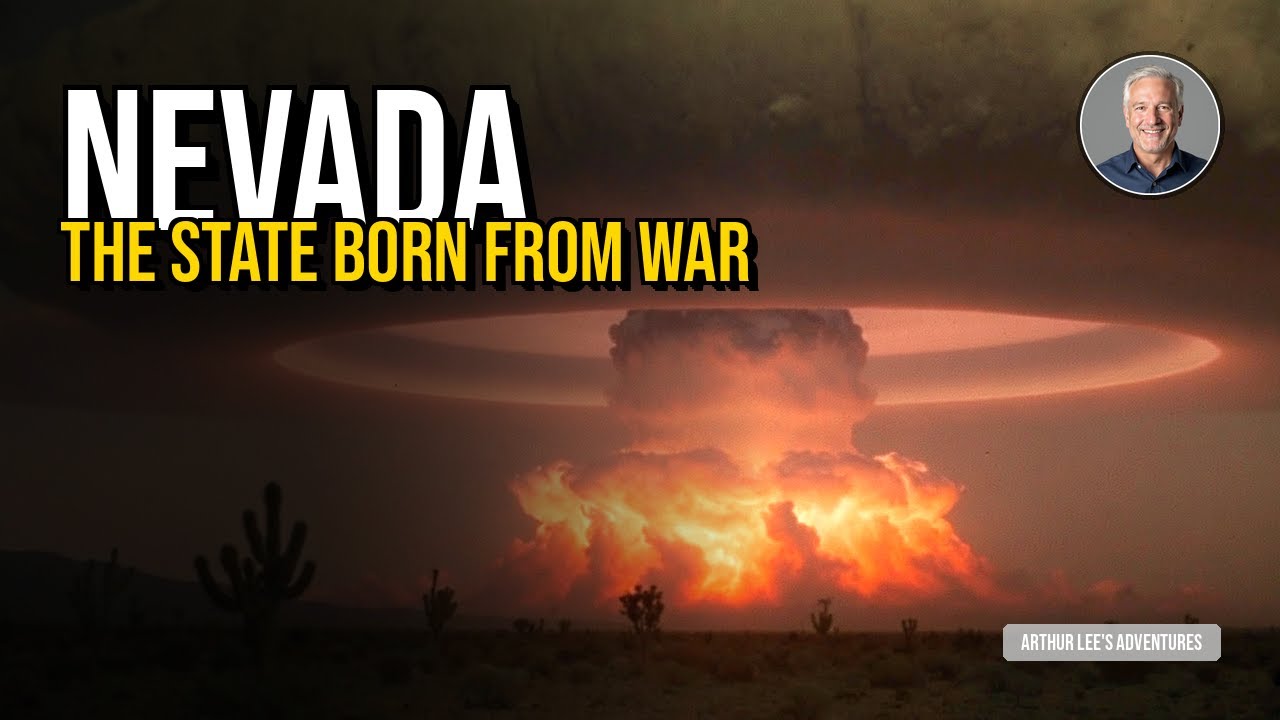
Perhaps no single phenomenon better captures Nevada’s surreal relationship with federal power than the atomic viewing parties that transformed Las Vegas into an unlikely nuclear tourism destination. From 1951 to 1963, the Nevada Test Site, located just 65 miles northwest of Las Vegas, conducted 928 nuclear tests—more than all other nuclear powers combined during the same period.
What makes this chapter of history particularly remarkable isn’t just the scale of testing, but how Las Vegas entrepreneurs turned potential catastrophe into profitable entertainment. Hotels like the Desert Inn and the Sahara constructed special rooftop viewing areas complete with telescopes, deck chairs, and specially trained bartenders mixing “atomic cocktails”—a potent blend of vodka, brandy, and champagne served with a radioactive green glow courtesy of food coloring.
The Las Vegas Chamber of Commerce published calendars marking detonation dates, and the city’s population would swell with tourists arriving specifically to witness the pre-dawn flashes that could be seen from 100 miles away. The mushroom clouds, rising 40,000 feet into the desert sky, became an unofficial symbol of Las Vegas alongside the neon signs and casino chips.
This atomic tourism boom coincided with the arrival of organized crime figures who saw opportunity in Nevada’s loose regulations and federal preoccupation with nuclear testing. Bugsy Siegel’s assassination in 1947 had created a power vacuum that was quickly filled by more sophisticated criminal enterprises, who understood that a state focused on atomic experimentation might pay less attention to casino skimming operations.
Howard Hughes and the Billionaire’s Nuclear Obsession
By 1966, the eccentric billionaire Howard Hughes had established himself as Nevada’s most influential resident, purchasing the Desert Inn when the owners tried to evict him from his penthouse suite. Hughes’s Nevada empire eventually encompassed seven casinos, an airline, vast mining claims, and significant political influence—but his most consequential battle was against continued nuclear testing.
Hughes had witnessed the atomic tourism spectacle firsthand and recognized what government officials were reluctant to acknowledge: the tests were contaminating vast areas of Nevada and Utah with radioactive fallout. His teams of scientists and lawyers launched a systematic campaign to document health effects and challenge the Atomic Energy Commission’s safety claims.
What made Hughes particularly effective wasn’t just his wealth, but his paranoia-driven attention to detail. His operatives collected thousands of pages of government documents, witness testimonies, and scientific measurements that would later prove crucial in establishing the link between atomic testing and increased cancer rates in “downwind” communities.
The Hughes organization’s 1968 lawsuit against the federal government marked the first serious legal challenge to the nuclear testing program. While the case was ultimately settled out of court, it forced the government to acknowledge that atmospheric testing posed genuine health risks—contributing to the 1963 Limited Test Ban Treaty that moved nuclear experiments underground.
Native American Resistance: Chief Numaga’s Forgotten Legacy
Long before atomic tests and casino empires, Nevada was the site of one of the American West’s most sophisticated Native American resistance movements. Chief Numaga of the Northern Paiute, also known as Young Winnemucca, orchestrated a series of strategic campaigns between 1859 and 1863 that demonstrated remarkable military and diplomatic skill.
Unlike many tribal leaders who were forced into reactive defensive positions, Numaga proactively sought to limit white settlement through carefully planned economic pressure. His warriors targeted supply lines, communication routes, and isolated mining camps while avoiding civilian casualties—a approach that won grudging respect even from military opponents like Major William Ormsby.
Numaga’s strategy proved so effective that it required unprecedented federal military intervention. The establishment of Fort Churchill in 1860 and the deployment of regular Army units represented one of the largest military commitments in Nevada Territory’s early history. When Numaga finally agreed to peace negotiations in 1863, he had secured better terms than most tribal leaders achieved during this period, including reserved lands and compensation for seized territory.
The Numaga Wars, as they came to be known, established patterns of federal-state tension that would echo through Nevada’s later history. The massive federal military presence required to subdue a relatively small Native American population demonstrated the challenges of governing Nevada’s vast, difficult terrain—lessons that would prove relevant during later federal land disputes.
Divorce Capital Economics and Social Engineering
Between 1931 and 1970, Nevada’s liberalized divorce laws transformed Reno into America’s unofficial divorce capital, creating an entire economy built around marital dissolution. The state’s six-week residency requirement—compared to years-long waiting periods in most other states—attracted over 30,000 divorce-seekers annually during peak years.
This divorce boom was no accident but rather a carefully engineered economic development strategy championed by Governor Robert List and other Nevada politicians who recognized that legal services could be just as profitable as mining or gambling. Reno’s divorce ranches—luxury accommodations designed specifically for wealthy women waiting out their residency periods—generated millions in revenue while establishing Nevada as a pioneer in what would later be called “jurisdiction shopping.”
The social implications extended far beyond economics. Nevada’s divorce industry attracted celebrities, politicians, and business leaders whose personal scandals might have remained local news but instead became national stories thanks to Nevada’s unique legal environment. This constant media attention helped establish Nevada’s reputation as a place where normal social rules didn’t apply—a perception that proved crucial in attracting both tourists and criminal enterprises.
The Mustang Ranch and Legal Prostitution Experiments
Perhaps no figure better embodies Nevada’s willingness to experiment with controversial social policies than Joe Conforte, who transformed legal prostitution from a barely tolerated frontier tradition into a regulated, profitable industry. Conforte’s Mustang Ranch, operating legally in Storey County from 1971 to 1999, became a testing ground for questions about sex work regulation that other states were unwilling to explore.
Conforte’s innovations extended beyond simple legalization. The Mustang Ranch implemented comprehensive health testing, employee benefits, security protocols, and taxation systems that generated significant revenue for rural Nevada counties. By the 1980s, legal brothels were contributing over $2 million annually in local taxes while providing employment for hundreds of workers in regions with few economic alternatives.
The Conforte empire also illustrated the complex relationship between legal and illegal enterprises in Nevada. Despite operating a legal business, Conforte was repeatedly investigated for tax evasion, money laundering, and connections to organized crime figures. His 1999 conviction and flight to Brazil highlighted the ongoing challenges of regulating industries that remained illegal everywhere else in America.
Paleontological Discoveries and Scientific Significance
Away from the casinos and test sites, Nevada’s desert landscapes were yielding scientific discoveries that rewrote understanding of prehistoric life in North America. The work of paleontologist Siemon Muller and his teams in Nevada’s fossil beds during the 1960s and 1970s revealed evidence of ancient ecosystems that had supported diverse megafauna during the Pleistocene epoch.
Muller’s excavations in the Las Vegas Valley uncovered remains of ground sloths, saber-toothed cats, and ancient horses that had thrived in Nevada during wetter climate periods. These discoveries provided crucial evidence for theories about climate change, extinction events, and the arrival of human populations in North America.
The scientific significance of Nevada’s fossil discoveries was often overshadowed by more dramatic contemporary events, but they established Nevada as an important center for paleontological research. The contrast between ancient life flourishing in Nevada’s past and atomic testing in its present created a unique scientific irony that researchers noted with dark humor.
Federal Land Control and Western Autonomy
Throughout this entire period, an underlying tension shaped every aspect of Nevada’s development: the federal government’s control of over 85% of the state’s land. This unprecedented level of federal ownership created unique opportunities for large-scale projects like nuclear testing while simultaneously limiting Nevada’s autonomy in ways that eastern states never experienced.
The Sagebrush Rebellion of the 1970s and 1980s represented Nevada’s most serious attempt to challenge federal land control, with state politicians arguing that continued federal ownership violated the equal footing doctrine that governed western statehood. While these legal challenges ultimately failed, they established Nevada as a center for western land rights activism that continues today.
Legacy and Modern Implications
The period from 1928 to 1992 established Nevada as America’s premier example of what happens when federal power, criminal enterprise, and social experimentation converge in a sparsely populated landscape. The atomic tourism phenomenon seems almost unthinkable today, yet it reveals how quickly societies can normalize extraordinary risks when economic incentives align with government priorities.
Nevada’s history during these decades offers crucial lessons for understanding modern debates about federal overreach, environmental justice, and the relationship between economic development and public safety. The state’s willingness to serve as a testing ground for everything from nuclear weapons to legalized prostitution created a unique laboratory for American social policy—one whose results continue to influence national debates about regulation, taxation, and individual liberty.
The legacy of this period extends far beyond Nevada’s borders. The legal precedents established through Hughes’s environmental lawsuits influenced national nuclear policy. The divorce industry pioneered jurisdiction shopping strategies now common in corporate law. Even the atomic tourism phenomenon provided early examples of dark tourism that can be seen in modern visits to disaster sites and former conflict zones.
Understanding Nevada’s hidden history from this transformative period illuminates not just the Silver State’s unique character, but broader patterns in American development that textbooks rarely acknowledge. In Nevada’s willingness to embrace both opportunity and risk, we see reflected the larger American experiment with pushing boundaries—geographical, legal, and moral—in pursuit of progress, profit, and power.