Pennsylvania’s Hidden History: 10 Facts They Never Taught You in School
The Keystone State didn’t just witness American history — it built the infrastructure of the modern world, then somehow let other states take the credit.
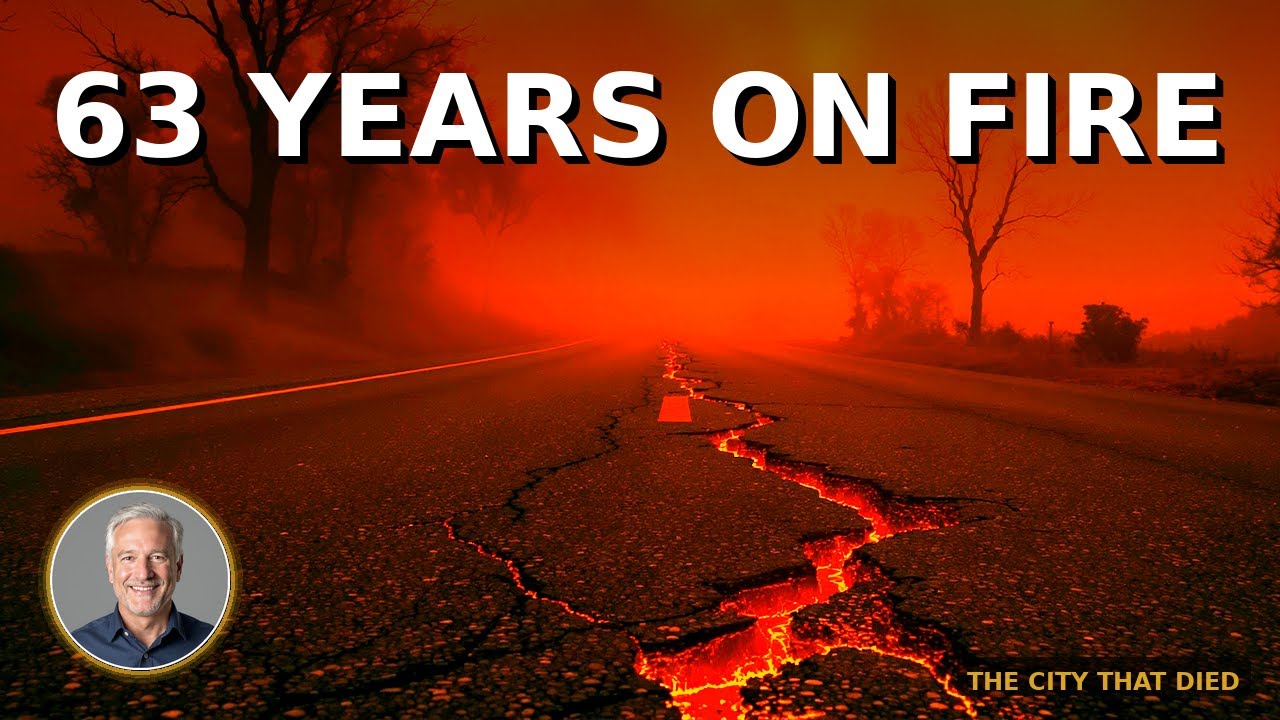
There is a town in Schuylkill County, Pennsylvania, where the ground itself is on fire. Has been since 1962. Steam rises from cracks in the earth on cold mornings. The asphalt on Route 61 buckled so severely from underground heat that the state eventually just abandoned the road. Of the 1,400 people who once called Centralia home, ten remained by 2010. The federal government spent over $42 million relocating everyone else.
And most Americans have never heard of it.
That particular story — spectacular, unsettling, almost gothic in its imagery — tells you something important about Pennsylvania’s relationship with its own history. The state has a remarkable habit of producing world-altering events, inventions, and industries, then watching those achievements fade from popular memory while other regions claim the spotlight.
This is an attempt to correct that record.
Benjamin Franklin and the Invention of the American Intellectual
Most people know Benjamin Franklin flew a kite in a thunderstorm. Far fewer appreciate the full architecture of his influence on Pennsylvania — and through Pennsylvania, on the intellectual culture of the young nation.
Franklin arrived in Philadelphia in 1723 as a 17-year-old runaway printer’s apprentice. What followed over the next several decades was less a career than a sustained act of institution-building. He founded the Library Company of Philadelphia in 1731, the first lending library in the American colonies. He established the American Philosophical Society in 1743. He co-founded what would become the University of Pennsylvania in 1749. He organized Philadelphia’s first volunteer fire company and helped establish its first hospital.
The lightning rod, bifocal lenses, the flexible urinary catheter, the Pennsylvania fireplace — Franklin’s inventions were practical tools born from genuine curiosity about how the natural world worked. But his deeper contribution was cultural. Franklin demonstrated, in real time and in a colonial city still very much on the edges of European civilization, that scientific inquiry and civic responsibility were not separate pursuits. They were the same pursuit.
Philadelphia was not merely the setting for Franklin’s work. It was his laboratory. The city’s dense intellectual community, its Quaker tradition of empirical observation, and its position as the largest city in colonial America made it the natural birthplace of American Enlightenment thinking. When the founders gathered in Philadelphia to draft the Declaration of Independence and later the Constitution, they were walking into a city that Franklin had spent decades preparing for exactly that kind of work.
Edwin Drake and the Well That Changed Everything
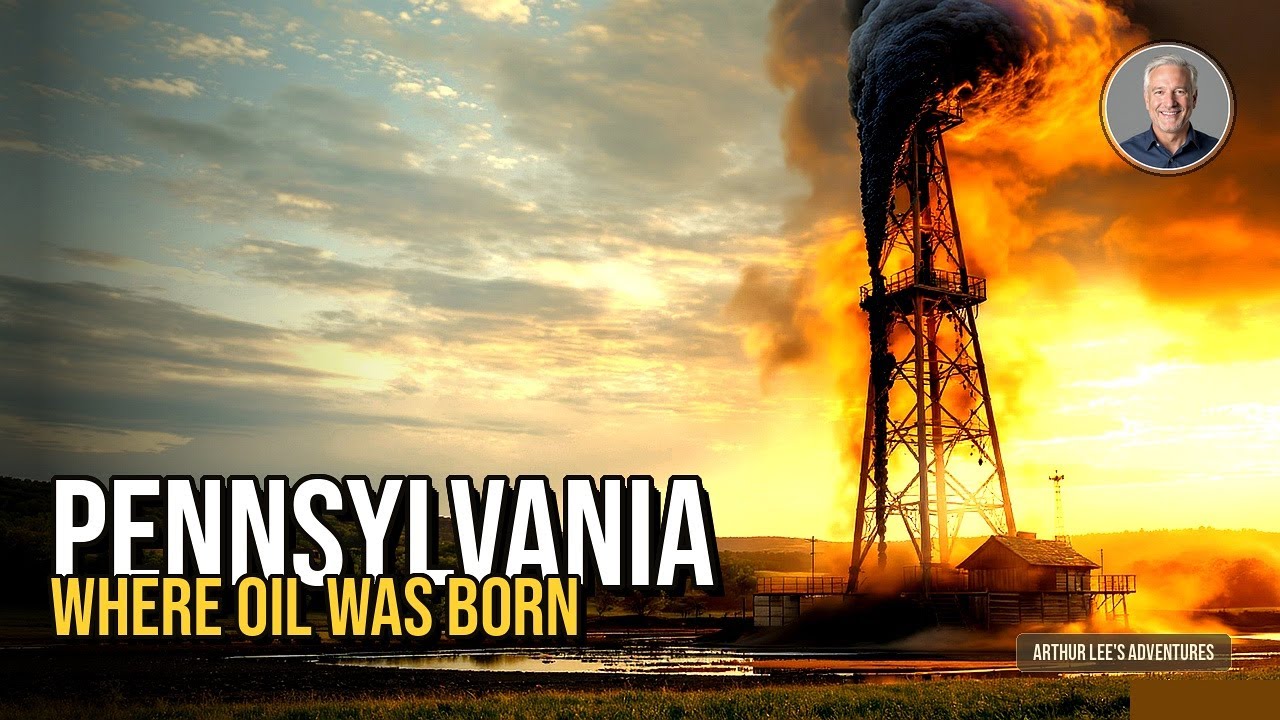
On August 27, 1859, a former railroad conductor named Edwin Drake struck oil at a depth of 69.5 feet near Titusville, Pennsylvania. The event is often recorded as a footnote in industrial history. It deserves considerably more than that.
Drake’s well in northwestern Pennsylvania launched the commercial petroleum industry. Within two years, oil production in the region had reached three million barrels annually. The kerosene refined from Pennsylvania crude replaced whale oil in lamps across the country, effectively ending the commercial whaling industry and sparing the sperm whale from likely extinction. Standard Oil, John D. Rockefeller’s empire, was built on the infrastructure and supply chains that originated in the Pennsylvania oil fields.
Every geopolitical calculation involving oil in the 20th and 21st centuries — the two World Wars, the Cold War energy politics, the OPEC embargoes, the Gulf Wars — traces a direct line back to that muddy creek bank in Venango County in 1859. Pennsylvania didn’t just discover oil. It created the conditions under which oil became the organizing principle of modern industrial civilization.
Drake himself died nearly penniless in 1880, which is its own kind of Pennsylvania story.
ENIAC and the Birth of the Computing Age
In 1945, the University of Pennsylvania was home to something that weighed 30 tons, occupied 1,800 square feet, and contained roughly 18,000 vacuum tubes. ENIAC — the Electronic Numerical Integrator and Computer — was the world’s first general-purpose electronic computer, and it was built in Philadelphia.
John Presper Eckert and John Mauchly led the project, funded initially by the U.S. Army to calculate artillery firing tables. What they actually built was the conceptual foundation of every computing device that followed. ENIAC could perform 5,000 additions per second — a speed incomprehensible to contemporary observers. It ran its first full operational program in 1945 and was publicly unveiled in February 1946.
The legal history of who actually “invented” the computer is genuinely complicated — a 1973 federal court decision invalidated some of the ENIAC patents and credited John Atanasoff with earlier foundational work. But the cultural and practical reality is that ENIAC, built by Eckert and Mauchly in Pennsylvania, was the machine that demonstrated electronic computing was viable, scalable, and transformative. Silicon Valley didn’t invent the digital age. It commercialized what Pennsylvania engineers first proved was possible.
Frank Conrad and the Radio Revolution Nobody Remembers
Before there was broadcast radio, there was a Westinghouse engineer in Pittsburgh named Frank Conrad who, in 1919 and 1920, began transmitting music and news from his garage in Wilkinsburg. His experimental broadcasts attracted enough listeners that Westinghouse formalized the operation, and on November 2, 1920, KDKA Pittsburgh transmitted the results of the Harding-Cox presidential election — the first scheduled broadcast on what is considered the world’s first commercial radio station.
Conrad’s contribution is almost entirely absent from popular histories of American media, which tend to focus on the glamour of New York networks and Hollywood studios. But the basic model of broadcasting — scheduled programming, mass audiences, advertiser support — was pioneered in western Pennsylvania by an engineer who was largely just curious about what would happen if he put a microphone near a phonograph.
Joseph Leidy and the Science Beneath Your Feet
Less famous than Franklin, less celebrated than Drake, Joseph Leidy was a Philadelphia naturalist who, working largely in the mid-19th century, essentially founded American vertebrate paleontology. His 1858 description of Hadrosaurus foulkii — a dinosaur excavated in New Jersey but analyzed and described at the Academy of Natural Sciences in Philadelphia — was the first relatively complete dinosaur skeleton mounted for public display anywhere in the world.
Leidy’s broader contributions ranged across parasitology, microscopy, and comparative anatomy. He identified the Trichinella parasite in pork, which led directly to food safety reform. He was, in the estimation of many historians of science, the most significant naturalist America produced in the 19th century. He is remembered today primarily by specialists.
The Fire That Would Not Go Out: Centralia’s Underground Inferno
Return, finally, to Centralia.
On May 27, 1962, the Centralia volunteer fire department did something routine: they burned trash in an open pit, as they had done before, near an old strip mine. What they apparently did not know — or did not sufficiently appreciate — was that the pit had been opened into an exposed coal seam connected to an extensive network of abandoned underground mines beneath the town.
The fire caught. It spread laterally through the mines. By the time anyone understood the full scope of what was happening, the fire had moved too far underground to be easily addressed. Attempts to excavate it, flush it with water and mud slurry, and cut trenches to contain it all proved insufficient. The fire followed the coal, and there was a great deal of coal.
Through the 1970s and into the 1980s, sinkholes began opening beneath homes. Carbon monoxide levels became dangerous. In 1981, a 12-year-old named Todd Domboski nearly fell into a sinkhole that opened beneath him in his backyard — the gas escaping from below was measured at lethal concentrations. Congress appropriated funds. The relocation effort began.
Today, Centralia is functionally a ghost town. The streets remain, mapped and numbered but mostly leading to empty lots where houses once stood. A population that peaked at over 1,400 has been reduced to a handful of holdouts who refused to leave. The fire continues burning, estimated to contain enough coal fuel to sustain it for another 250 years.
Centralia is occasionally cited as an inspiration for the video game and film franchise Silent Hill, which borrowed its imagery of a fog-covered, abandoned town sitting above an underground fire. The fictional version has become more familiar to popular culture than the real one.
Why Pennsylvania Gets Overlooked — And What That Tells Us
The pattern across all of these stories is consistent. Pennsylvania produces something foundational — a political document, a scientific institution, an industrial revolution, a technological breakthrough — and the credit gradually migrates elsewhere. New York claims the financial and cultural legacy. California claims the technological one. Virginia and Massachusetts claim the political one.
Part of this is geography and demographics. Pennsylvania sits between the Northeast’s cultural capitals and the South’s historical narrative, fitting neatly into neither. Part of it is the state’s own complicated identity: urban Philadelphia and Pittsburgh are culturally distinct from the rural and post-industrial middle of the state, making a coherent statewide narrative difficult to construct and market.
But the deeper issue may be that Pennsylvania’s contributions are foundational in a specific sense — they are the infrastructure beneath more visible structures. ENIAC made Silicon Valley possible. The Drake well made Rockefeller possible. Franklin’s institutions made Philadelphia the birthplace of American democracy. Foundations, almost by definition, get buried.
The Centralia fire is perhaps the most honest metaphor the state has produced: something essential, something transformative, burning steadily underground, largely invisible to anyone not looking carefully at the ground beneath their feet.
Pennsylvania didn’t just participate in the making of modern America. In several of the most consequential respects, it is the making of modern America — which is precisely why its history deserves more than a footnote in the textbooks that somehow never quite got around to explaining where the oil industry, the computer, and broadcast radio actually came from.
If this history surprised you, consider which states in your own region have foundational stories that never made it into the standard curriculum. The gap between what happened and what gets remembered is almost always more interesting than either side of it.