The Hidden History of Texas: When Nazi POWs Received Better Treatment Than Black American Soldiers
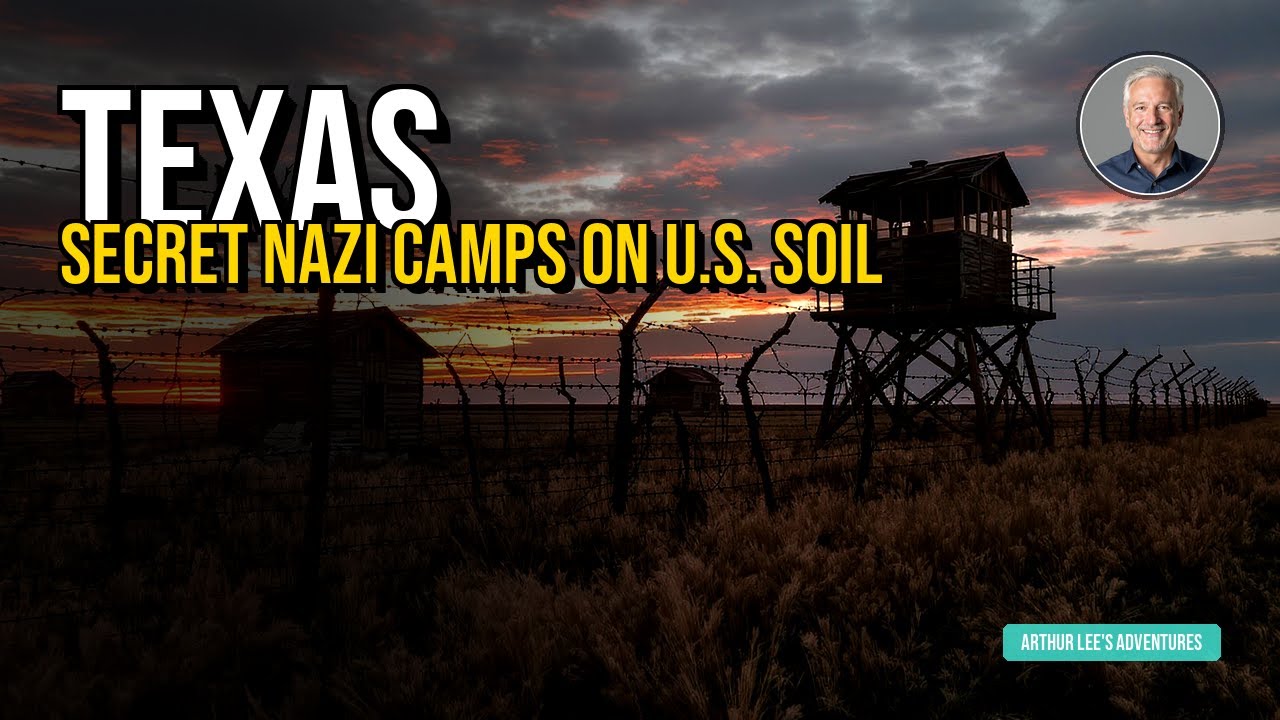
During World War II, Texas housed over 50,000 Nazi prisoners of war across dozens of camps scattered throughout the state. These German soldiers received three meals a day, medical care, recreational activities, and treatment that strictly adhered to the Geneva Convention. Meanwhile, Black American soldiers serving their own country faced systematic segregation, discrimination, and treatment that often fell far below the standards guaranteed to enemy combatants.
This jarring contrast reveals one of the most uncomfortable truths about 1940s America—and it’s just one of many surprising chapters in Texas history that challenge everything we thought we knew about the Lone Star State.
The Nazi POW Program That Built Texas Communities
Between 1942 and 1946, Texas operated more prisoner of war camps than any other state, with major facilities at Camp Swift, Camp Fannin, and dozens of smaller work camps. The German prisoners weren’t simply confined—they became integral to wartime agriculture and construction projects across Texas.
At Camp Hearne, approximately 4,800 German prisoners worked on local farms, built roads, and even constructed parts of the camp itself. The prisoners received 80 cents per day for their labor, could attend educational classes, and organized elaborate theatrical productions. Many camps featured orchestras, art classes, and sports leagues that rivaled civilian facilities.
The contrast with the treatment of Buffalo Soldiers and other Black American servicemen was stark. While German POWs dined in integrated mess halls with white American guards, Black soldiers were forced to eat in segregated facilities—when such facilities existed at all. In many Texas towns, German prisoners could shop in stores and attend movies where Black American soldiers were explicitly banned.
The Buffalo Soldiers: Heroes Denied Recognition
The Buffalo Soldiers—African American cavalry and infantry regiments formed after the Civil War—served with distinction on the Texas frontier from 1867 to 1885. These regiments, primarily the 9th and 10th Cavalry and the 24th and 25th Infantry, earned 18 Medals of Honor while protecting settlers, building roads, and fighting in campaigns against Native American tribes.
Despite their exemplary service record and the respect they earned from many of their adversaries (who gave them the name “Buffalo Soldiers” as a term of honor), these men returned to a segregated society that offered them few opportunities and little recognition.
The irony became even more pronounced during World War II. While German prisoners enjoyed relatively comfortable conditions in Texas camps, Black soldiers training at bases like Camp Swift faced daily humiliation and discrimination. They were prohibited from many base facilities, faced inferior housing and medical care, and were often assigned to menial labor rather than combat training.
The Camel Corps: America’s Strangest Military Experiment
Before the Buffalo Soldiers, Texas witnessed one of the most bizarre military experiments in American history. In 1856, the U.S. Army established a camel cavalry unit at Camp Verde, about 60 miles northwest of San Antonio. Secretary of War Jefferson Davis championed the project, believing camels could revolutionize transportation across the American Southwest.
The Army imported 75 camels from the Middle East, along with experienced handlers, and began training American soldiers in camel cavalry techniques. The experiment showed promise—camels could carry 600-pound loads across desert terrain that challenged horses and mules. However, the program faced unexpected obstacles: American soldiers struggled to adapt to the temperamental animals, and horses were terrified of the camels’ scent.
The Civil War effectively ended the experiment. Camp Verde was abandoned, and many camels were sold to circuses or released into the wild. For decades afterward, Texans reported sightings of wild camels roaming the desert, with the last confirmed sighting occurring in 1941.
The Battle That Wouldn’t End
Texas was also the site of the Civil War’s final land battle—fought a full month after Robert E. Lee’s surrender at Appomattox. The Battle of Palmito Ranch occurred on May 12-13, 1865, near Brownsville, when Confederate forces under Colonel John “Rip” Ford engaged Union troops in what should have been a peaceful transition.
The battle resulted from poor communication and lingering tensions along the Rio Grande. Neither side had received clear orders about the war’s end, and local commanders operated with considerable autonomy. Ford’s Confederates actually won this final engagement, capturing several Union soldiers and equipment before learning that their cause had already been lost.
The battle’s timing reveals the challenges of communication in 19th-century America and the reluctance of some Confederate commanders to accept defeat. It also demonstrated Texas’s peripheral position in the broader conflict—remote enough that news of surrender took weeks to reach the frontier.
When Galveston Defied the Sea
The deadliest natural disaster in American history struck Galveston on September 8, 1900. The hurricane generated winds exceeding 145 mph and a storm surge that submerged the entire island city. An estimated 12,000 people died, and the storm destroyed over 3,600 homes.
Rather than abandon the city, Galveston undertook one of the most ambitious engineering projects in American history. Between 1902 and 1910, the city raised its elevation by as much as 17 feet, pumping millions of cubic yards of sand beneath existing buildings. Engineers also constructed a 10.4-mile seawall that still protects the city today.
The project required lifting entire city blocks—including multi-story buildings—while residents continued living and working inside them. The Galveston grade raising remains one of the largest municipal engineering projects ever completed and demonstrated the determination of Texans to rebuild in the face of seemingly impossible odds.
NASA’s Secret Land Deal That Launched America to the Moon
In 1961, NASA quietly purchased 1,620 acres of rice fields southeast of Houston for $20 million. Local residents had little idea they were witnessing the birth of Mission Control. Rice farmer Frank Sharp sold his property to the government, not knowing it would become the nerve center for America’s space program.
The Manned Spacecraft Center (later Johnson Space Center) was strategically located near the Texas Gulf Coast to facilitate water recovery of spacecraft, close to universities for research partnerships, and in a region with favorable weather year-round. The facility became operational in 1963 and controlled every American crewed spaceflight from Gemini IV through the present day.
The transformation from rice paddies to rocket science symbolized Texas’s evolution from an agricultural frontier to a technological powerhouse. The same spirit that led settlers to attempt camel cavalry and rebuild cities after hurricanes now propelled America to the moon.
The Uncomfortable Truth About American Priorities
The treatment of Nazi POWs versus Black American soldiers in 1940s Texas reveals uncomfortable truths about American society that extend far beyond one state or one decade. The United States scrupulously followed international law regarding enemy prisoners while systematically denying basic dignity to its own citizens based on race.
This contradiction wasn’t accidental or incidental—it reflected deliberate policy choices made at the highest levels of government and society. The same military that segregated Black soldiers and prohibited them from combat roles treated German prisoners with courtesy and respect.
The irony deepened when considering that many Nazi prisoners expressed surprise at American racial segregation. Some German POWs later recalled being confused by Jim Crow laws that seemed to contradict American democratic ideals. Enemy soldiers were witnessing firsthand the gap between American principles and American practice.
Legacy and Modern Relevance
These hidden chapters of Texas history offer more than historical curiosity—they illuminate patterns of innovation, resilience, and moral contradiction that continue to shape American society. The state that experimented with camel cavalry also pioneered space exploration. The same communities that rebuilt after devastating hurricanes also grappled with fundamental questions of human dignity and equal treatment.
The Buffalo Soldiers eventually received greater recognition, with monuments and museums now honoring their service. The treatment of Nazi POWs has become a subject of historical study rather than official silence. But the broader questions raised by these contrasts—about who deserves dignity, who belongs to the American community, and how societies prioritize different values—remain relevant today.
Understanding this complex history doesn’t diminish Texas or America—it enriches our understanding of how societies navigate competing pressures and moral challenges. The same capacity for innovation that produced camel cavalry and lunar missions can also address contemporary challenges of equality and justice.
These stories remind us that history is rarely simple, heroes are often flawed, and the most important lessons often emerge from examining our most uncomfortable contradictions. Texas history, like American history, is too complex and too important to be reduced to simple narratives of progress or decline.
The real story is messier, more human, and ultimately more instructive than any sanitized textbook version could ever be.