The Rise and Fall of Hashima Island: When Industrial Ambition Created Earth’s Most Crowded Place
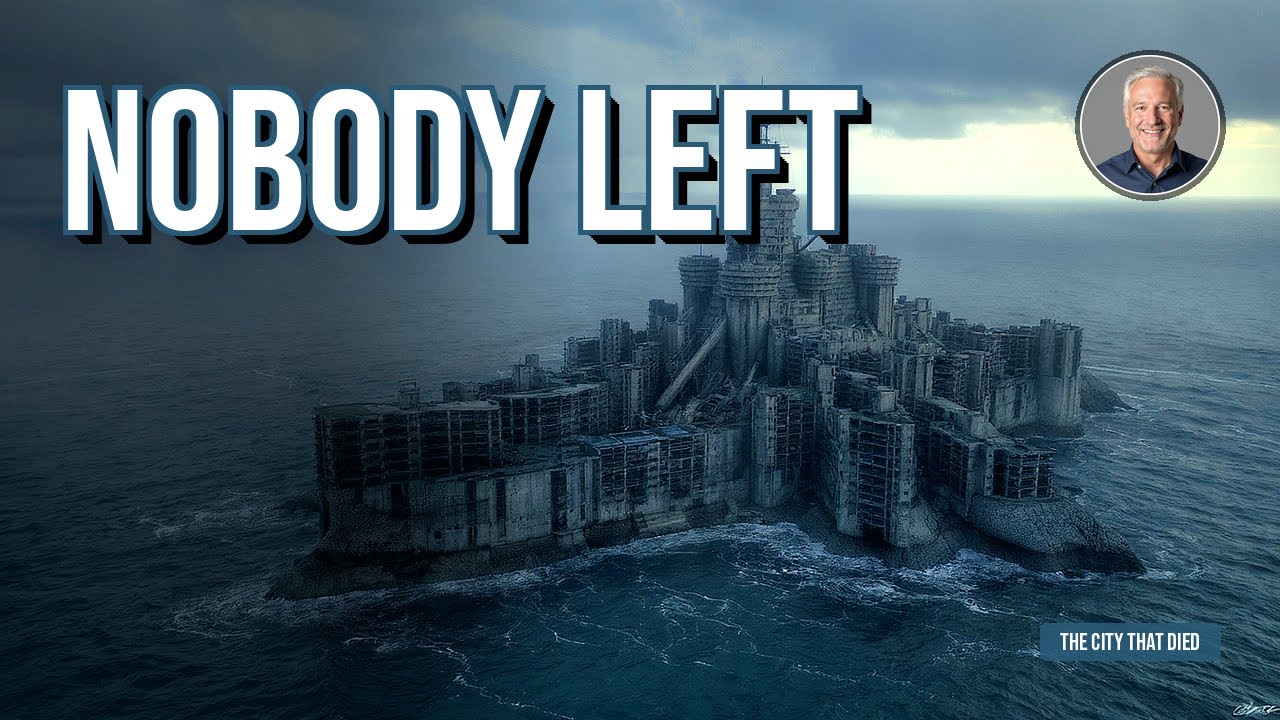
In the waters off Nagasaki Prefecture, a concrete fortress rises from the East China Sea like something from a dystopian novel. Hashima Island, known locally as “Gunkanjima” or Battleship Island for its distinctive silhouette, holds a record that will likely never be broken: the highest population density in human history. At its peak in 1959, this 16-acre artificial island housed 5,259 people—creating a staggering density of 83,000 people per square kilometer, nine times denser than Manhattan at its most crowded.
Yet today, the population stands at exactly zero. The story of how Hashima transformed from an uninhabited rock to humanity’s most densely packed settlement, then back to complete abandonment, reveals the extreme lengths of industrial capitalism and the human cost of Japan’s rapid modernization.
The Mitsubishi Vision: Building a City on Coal
The transformation of Hashima began in 1887 when Mitsubishi Corporation purchased the small, natural island and recognized its potential. Beneath the seabed surrounding this rocky outcrop lay rich veins of high-quality coal—fuel desperately needed for Japan’s industrial revolution. What made Hashima unique wasn’t just the coal, but Mitsubishi’s radical solution to the challenge of housing workers on such a tiny piece of land.
Under the direction of company executive Doutoku Sakamoto, Mitsubishi embarked on an unprecedented engineering project. They would expand the island itself, using concrete and landfill to create an artificial platform capable of supporting not just mining operations, but an entire self-contained city. By 1916, the island had grown from its original 6 acres to 16 acres, all of it reclaimed from the sea.
The company’s vision was totalitarian in scope: every aspect of life would be controlled and optimized for coal production. Mitsubishi built Japan’s first concrete apartment buildings on Hashima, towering structures that would house workers in efficient, standardized units. The island featured schools, a hospital, a temple, shops, restaurants, and even a rooftop garden—everything needed to sustain a captive workforce miles from the mainland.
Engineering Density: Life in Concrete Towers
The physical constraints of Hashima forced innovations in urban density that wouldn’t be seen elsewhere for decades. The island’s concrete apartment blocks, some rising nine stories, were architectural marvels of vertical living. Families of four or five shared single rooms measuring just 10 feet by 10 feet. Hallways were narrow tunnels connecting dozens of identical units, while communal bathhouses and kitchens served entire floors.
Privacy was virtually nonexistent. Children played in narrow corridors and on rooftops, their voices echoing through concrete canyons. The sound of neighbors was constant—conversations, arguments, crying babies, and the ever-present noise of industrial machinery operating 24 hours a day. Windows looked out onto more concrete, creating a claustrophobic environment where the horizon was often invisible.
Despite these conditions, Mitsubishi’s company town model created unexpected amenities. The island boasted one of Japan’s highest concentrations of television sets per capita by the 1960s, a cinema that showed the latest films, and even a pachinko parlor. Quality of life, while cramped, was often better than what rural workers could expect on the mainland—at least for Japanese residents.
The Underground Empire: Mining Beneath the Sea
The reason for this extraordinary concentration of humanity lay hundreds of feet below sea level, where miners worked in tunnels extending far beneath the ocean floor. Hashima’s undersea coal mines were among the most productive in Japan, but also among the most dangerous. Workers descended daily into a network of tunnels where temperatures reached 40°C (104°F) and humidity approached 100%.
The mining operation ran continuously, with workers organized into shifts that kept the coal flowing around the clock. Advanced for its time, the mine featured electric lighting, mechanical ventilation systems, and eventually conveyor belts that transported coal directly to loading facilities on the island’s edge. Ships would dock at concrete piers to load the black gold that powered Japan’s growing industrial economy.
By the 1940s, Hashima was producing over 400,000 tons of coal annually, making it one of the most productive mines in the Japanese Empire. The success created a feedback loop: more production required more workers, which demanded more housing, pushing population density to record levels.
The Dark Chapter: Forced Labor During World War II
The Pacific War brought a sinister transformation to Hashima’s character as a company town. As Japanese men were drafted for military service, Mitsubishi faced severe labor shortages in the dangerous undersea mines. The corporation’s solution involved collaboration with Japan’s wartime government to bring forced laborers to the island.
Beginning in 1943, hundreds of conscripted Korean civilians and Chinese prisoners of war were transported to Hashima under armed guard. These men faced conditions far worse than Japanese workers—inadequate food, brutal treatment, and the most dangerous assignments in the deepest, hottest sections of the mine. They were housed in separate, substandard quarters and subjected to constant surveillance.
Conservative estimates suggest that over 1,300 Korean and Chinese forced laborers worked on Hashima during the war years, with dozens dying from accidents, malnutrition, and exhaustion. Unlike voluntary workers who could theoretically leave, these men were prisoners whose only escape was death or Japan’s surrender. The contrast between the island’s modern amenities for Japanese residents and the harsh conditions for forced laborers exposed the brutal hierarchies underlying Japan’s wartime economy.
Peak Density and Daily Life in the 1950s-60s
The post-war years saw Hashima reach its population zenith as Japan’s economy recovered and coal demand soared. The 1959 population of 5,259 people represented not just a statistical record, but a functioning society compressed into an impossibly small space. Every square meter served multiple purposes: rooftops became playgrounds and gardens, narrow spaces between buildings housed essential services, and the island’s perimeter served as both seawall and social gathering space.
The social dynamics of such extreme density created unique cultural adaptations. Neighbors developed elaborate codes of conduct to manage noise and privacy. Children formed tight-knit groups that roamed the island’s concrete landscape like urban tribes. Professional relationships and personal lives intertwined completely since coworkers were also neighbors, classmates, and competitors for limited space and resources.
Shopping occurred at company stores using company currency, creating a closed economic loop that kept workers dependent on Mitsubishi. The isolation fostered intense community bonds—everyone knew everyone, marriages were community events, and tragedies affected the entire population. Yet this same closeness could feel suffocating, with interpersonal conflicts having nowhere to dissipate.
The Beginning of the End: Energy Transition
By the mid-1960s, Japan’s economic miracle was powered increasingly by petroleum rather than coal. The government’s energy policy shifted toward imported oil, which was cheaper and cleaner than domestic coal. For Hashima, this transition spelled doom. The coal that had justified the island’s existence was becoming obsolete.
Mitsubishi began reducing operations in the late 1960s, and younger residents started leaving for opportunities on the mainland. The island’s birth rate had already declined as families chose smaller apartments in cities over the cramped quarters of Hashima. What had once been a coveted assignment for Mitsubishi employees became a hardship posting that workers sought to escape.
The company tried to maintain operations by improving working conditions and wages, but market forces proved unstoppable. Coal prices fell while extraction costs remained high due to the challenging underwater mining conditions. By 1973, Mitsubishi announced the mine’s closure, giving residents just months to relocate.
April 20, 1974: The Final Exodus
The last day of Hashima as a living community was precisely choreographed. Residents had spent weeks packing belongings and arranging new housing on the mainland. Mitsubishi provided moving assistance and job placement, but nothing could ease the emotional impact of abandoning what had been home for generations of families.
The final ferry departed on April 20, 1974, carrying the island’s remaining residents to Nagasaki. They left behind not just homes, but an entire world—schools where children had learned, theaters where families had gathered, temples where they had prayed, and graves where ancestors were buried. The population dropped from hundreds to zero in a single day.
Within hours of the last departure, Hashima began its transformation from ghost town to ruin. Windows remained open, dishes sat unwashed, and personal belongings lay scattered—creating an eerie time capsule of 1970s Japanese life frozen at the moment of abandonment.
Modern Legacy: From Industrial Monument to UNESCO Heritage
Today, Hashima Island stands as one of the world’s most powerful monuments to industrial capitalism’s extremes. Designated as a UNESCO World Heritage Site in 2015, the island draws thousands of tourists annually who come to witness the concrete ruins of humanity’s densest settlement. The distinction recognizes both the engineering achievements and the historical significance of Japan’s rapid industrialization.
The UNESCO designation sparked international controversy over how Japan presents the forced labor history. South Korea and China demanded acknowledgment of wartime atrocities, while Japan initially emphasized the site’s industrial heritage. This ongoing diplomatic tension reflects broader debates about historical memory and corporate responsibility.
The island’s ruins continue deteriorating as salt air and typhoons gradually reclaim the concrete. Apartment buildings that once housed thousands now stand as hollow shells, their windows like empty eyes staring across the sea. Nature slowly infiltrates the urban landscape, with vegetation taking root in cracks and seabirds nesting in abandoned rooms.
What Hashima Teaches Us About Human Density and Corporate Power
The story of Hashima Island illuminates tensions between efficiency and humanity that remain relevant as urbanization accelerates globally. The island proved that extreme population density is technically feasible—humans can live and work in incredibly compressed spaces when properly organized. Yet it also demonstrated the social and psychological costs of such arrangements, particularly when controlled by a single corporate entity.
Modern cities worldwide grapple with similar challenges as housing costs force people into smaller spaces and corporate influence over urban development grows. The rise of company towns in the tech industry, from Google’s planned smart cities to Amazon’s influence over Seattle, echoes Mitsubishi’s total control over Hashima residents’ lives.
The island’s history also warns about the environmental and economic risks of single-industry dependence. Communities built around extractive industries—whether coal, oil, or rare earth minerals—face inevitable obsolescence as technology and markets evolve. The speed of Hashima’s abandonment foreshadows similar transitions as the world moves away from fossil fuels.
Perhaps most importantly, Hashima reminds us that behind every statistical superlative are individual human lives. The record-breaking population density represented thousands of families who called this concrete island home, who raised children and built communities under extraordinary circumstances. Their stories—both Japanese residents and forced laborers—deserve remembering as more than just numbers in the history of industrial development.
The empty buildings of Hashima Island continue their silent testimony to an experiment in human density that succeeded brilliantly and failed completely, leaving behind haunting questions about progress, community, and the price of industrial ambition that echo across the waters to our own urban future.