The Town That Killed Its Own People: How Wittenoom Became Australia’s Most Toxic Ghost Town
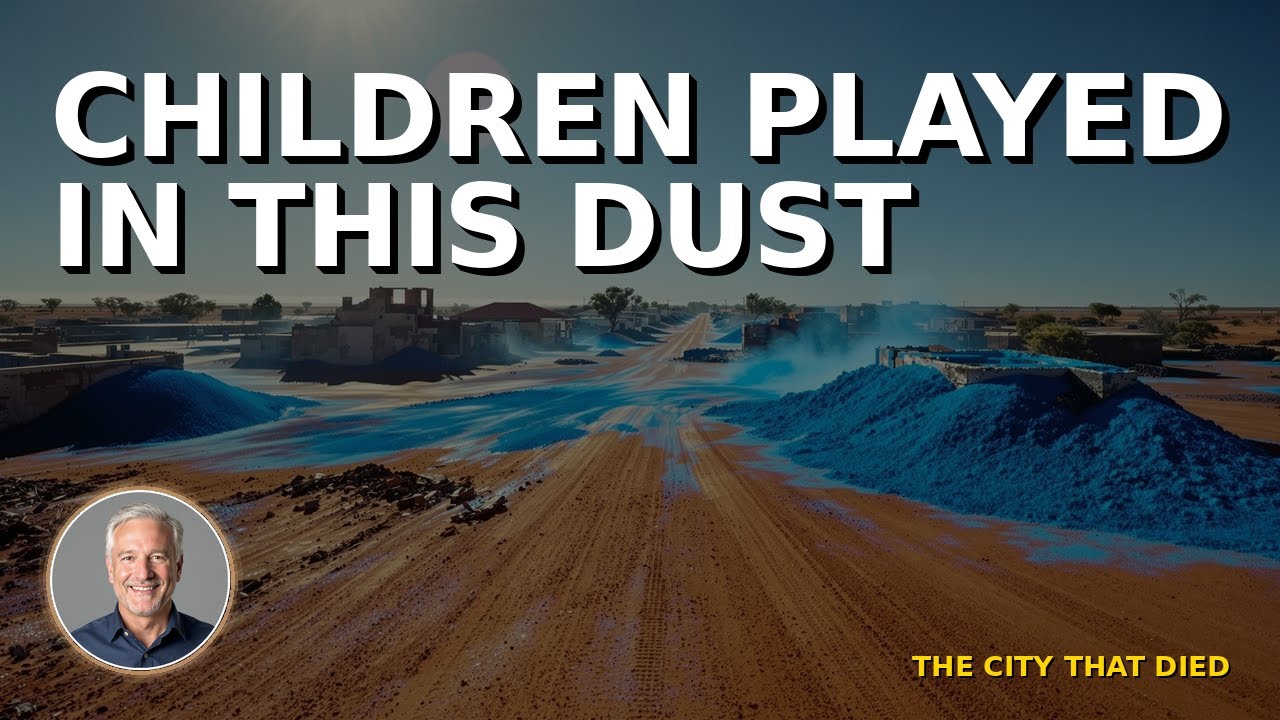
In the red heart of Western Australia’s Pilbara region lies what was once called “Australia’s Chernobyl” — a place so contaminated with deadly blue asbestos that the government took the extraordinary step of erasing it from official maps. Today, three million tonnes of asbestos tailings remain scattered across Wittenoom Gorge, a crystalline blue testament to one of the most devastating cases of corporate negligence in Australian history.
Between 1943 and 1966, approximately 20,000 people lived and worked in Wittenoom, unknowingly breathing in microscopic fibers that would claim thousands of lives decades later. Children built sandcastles from glittering blue tailings. Housewives hung laundry on lines dusted with asbestos waste. Workers came home covered in the stuff, embracing families who had no idea they were being exposed to a silent killer.
The story of Wittenoom is more than an environmental disaster — it’s a case study in how corporate profits, government complicity, and colonial attitudes toward Indigenous land rights can converge to create a human tragedy of staggering proportions.
The Blue Gold Rush That Became a Death Sentence
The Australian Blue Asbestos Company established operations at Wittenoom in 1943, drawn by the world’s richest deposits of crocidolite — the deadliest form of asbestos. The company, later acquired by CSR Limited in 1948, marketed this “blue gold” as a miracle mineral for fireproofing and insulation.
What made Wittenoom’s asbestos particularly valuable also made it extraordinarily dangerous. Crocidolite fibers are thinner than human hair and, once inhaled, become permanently lodged in lung tissue. Unlike other forms of asbestos, blue asbestos causes mesothelioma — an aggressive cancer with no cure and a latency period of 20-50 years.
From the beginning, mining operations showed a callous disregard for safety. The mill that processed raw asbestos ore was deliberately positioned upwind of the town, ensuring that prevailing winds carried clouds of deadly dust directly over residential areas. Workers received no protective equipment and were told the dust was harmless. When concerns were raised about health risks, company officials dismissed them as hysteria.
Dr. Eric Saint, who served as the town’s doctor from 1948 to 1951, repeatedly warned CSR Limited about the health risks he was observing. His reports documented unusual respiratory problems among workers and their families, but the company ignored his recommendations for dust control measures. Saint’s warnings, buried in corporate archives for decades, would later become crucial evidence in landmark legal cases against CSR.
A Company Town Built on Deadly Ground
At its peak in the 1950s, Wittenoom was a thriving company town of nearly 2,000 residents. CSR had constructed an entire community infrastructure: homes, a school, a hospital, recreation facilities, and shops. The company maintained strict control over every aspect of life, from housing allocations to the town’s single newspaper.
For many residents, especially those coming from post-war Britain under assisted migration schemes, Wittenoom seemed like paradise. The town offered steady employment, modern amenities, and a close-knit community spirit. Children attended the local school, played in the town’s parks, and swam in mine pools filled with contaminated water.
The Banjima people, the traditional owners of this land, watched as their ancestral country was carved up for industrial extraction. Like many Indigenous communities during this period, the Banjima had no legal rights to prevent mining on their traditional lands. The establishment of Wittenoom represented another chapter in the dispossession of Aboriginal people from country that had sustained them for thousands of years.
The tragic irony was that many residents genuinely loved living in Wittenoom. Even decades later, survivors would speak fondly of the community spirit and friendships forged in the desert town. They had no way of knowing that their idyllic lifestyle was slowly killing them.
The Long Death: When the Killing Became Visible
By the early 1960s, the death toll was becoming impossible to ignore. Workers were developing pneumoconiosis and lung cancer at alarming rates. More ominously, cases of mesothelioma — then a barely understood disease — began appearing not just among miners, but among their wives and children.
The company’s response was to commission its own medical studies, which predictably downplayed the health risks. Meanwhile, independent researchers were reaching very different conclusions. In 1960, a landmark study published in the British Journal of Industrial Medicine definitively linked blue asbestos exposure to mesothelioma, sending shockwaves through the global asbestos industry.
Faced with mounting evidence and potential liability, CSR made a calculated business decision. Rather than implement expensive safety measures, the company chose to abandon Wittenoom entirely. In 1966, mining operations ceased, and the company walked away, leaving behind a contaminated wasteland and a community in denial about the magnitude of their exposure.
The mine closure devastated Wittenoom’s economy, but many residents chose to stay. Some opened businesses catering to tourists drawn by the area’s spectacular gorges and hiking trails. Others simply couldn’t afford to leave or couldn’t bear to abandon the only home they’d known. A handful of die-hard residents remain to this day, despite government pressure to relocate.
Government Erasure and the Politics of Forgetting
As the death toll mounted through the 1970s and 1980s, government attitudes toward Wittenoom shifted from neglect to active erasure. The Western Australian government began a systematic campaign to remove all traces of the town from official existence.
In 1978, Australia Post ceased mail delivery to Wittenoom. Phone services were disconnected in 1994. The town was removed from road signs and tourist maps. Most dramatically, Wittenoom’s postcode was cancelled — the only time in Australian history a town has been deliberately erased from the postal system.
The government’s strategy was clear: if Wittenoom didn’t officially exist, tourists wouldn’t visit, and further exposure could be limited. But this policy of erasure also served to minimize government liability and public awareness of the ongoing health crisis.
Despite official non-existence, people continued to visit Wittenoom. The contaminated gorge remains easily accessible by car, and tourists still hike through areas thick with asbestos dust. Warning signs are minimal and often ignored. The government’s attempts at invisibility have arguably made the site more dangerous by reducing awareness of the risks.
The Human Cost: Tracking Australia’s Deadliest Industrial Disaster
The full scope of Wittenoom’s death toll may never be known, but researchers estimate that over 2,000 people have died from asbestos-related diseases linked to the town. This makes it Australia’s worst industrial disaster — deadlier than any mining accident, factory fire, or transportation catastrophe.
What makes these deaths particularly tragic is their preventability. By 1960, the health risks of blue asbestos were well-established in scientific literature. CSR Limited had access to this research but chose to continue operations without implementing protective measures. Internal company documents, revealed during later court cases, showed executives were fully aware of the deadly risks they were imposing on workers and residents.
The victims weren’t just miners — they included wives who washed contaminated work clothes, children who played in asbestos tailings, and shopkeepers who lived downwind from the mill. Many victims developed symptoms decades after leaving Wittenoom, often in distant cities where doctors had no knowledge of their exposure history.
Perhaps most heartbreakingly, the Banjima people continue to suffer health consequences from contamination of their traditional lands. Unlike former mine workers, Indigenous victims often lack detailed employment records that would support compensation claims, making it difficult to prove their exposure despite obvious connections to the contaminated landscape.
Legal Battles and Corporate Accountability
The fight for justice for Wittenoom victims has stretched across decades and produced landmark legal precedents. In 2005, the Supreme Court of Western Australia awarded Bernie Banton, an asbestos activist and mesothelioma sufferer, damages against CSR Limited. This case established important precedents for corporate liability in occupational health disasters.
However, many victims have struggled to obtain compensation. CSR Limited has faced hundreds of lawsuits but has successfully argued that safety standards of the 1940s and 1950s were different from modern expectations. The company has paid millions in settlements while maintaining it acted according to the knowledge and standards of its time — a claim disputed by historical evidence showing executives knew about health risks.
The legal battles have also revealed the extent of corporate cover-ups. Internal CSR documents showed the company suppressed research about asbestos health risks, intimidated doctors who raised concerns, and deliberately misled workers about safety measures. These revelations have contributed to broader reforms in corporate disclosure requirements and occupational health regulations.
Environmental Legacy: A Contaminated Landscape
Today, Wittenoom represents one of Australia’s most contaminated sites. Three million tonnes of asbestos tailings remain scattered across the landscape, with no realistic prospect of cleanup. The cost of proper remediation has been estimated at over $1 billion — far exceeding any government’s willingness to fund such an effort.
The contamination extends far beyond the immediate mine site. Asbestos fibers have spread throughout Wittenoom Gorge, carried by wind and water across an area of approximately 150 square kilometers. Popular hiking destinations like Dales Gorge and Karijini National Park contain measurable levels of contamination, though authorities maintain these levels are within acceptable limits for short-term exposure.
Climate change may worsen the contamination problem. Extreme weather events in the Pilbara have become more frequent and intense, potentially spreading asbestos fibers across wider areas. The 2019 Tropical Cyclone Veronica brought unprecedented winds and flooding to the region, raising concerns about further dispersion of contaminated materials.
For the Banjima people, the contamination represents a particular tragedy. Sacred sites and traditional camping areas remain contaminated with deadly fibers, effectively prohibiting safe access to country that has sustained their culture for millennia. The environmental damage from Wittenoom thus compounds the historical dispossession of Indigenous people from their traditional lands.
Modern Parallels: Lessons for Today’s Environmental Crises
The Wittenoom disaster offers sobering lessons for contemporary environmental and health challenges. The pattern of corporate knowledge, deliberate concealment, and government complicity that characterized the asbestos crisis can be seen in modern disputes over coal mining, chemical pollution, and climate change.
Like CSR Limited in the 1950s, modern corporations often possess internal research showing environmental and health risks while publicly maintaining their products are safe. The fossil fuel industry’s decades-long campaign to suppress climate science closely parallels the asbestos industry’s efforts to hide health research.
Wittenoom also demonstrates how environmental justice and Indigenous rights intersect. The Banjima people bore the costs of industrial extraction while receiving few benefits, a pattern repeated across mining projects throughout Australia. Modern developments like the Adani Carmichael coal mine have generated similar concerns about Indigenous consent and environmental justice.
Perhaps most importantly, Wittenoom shows how attempts to hide environmental problems often make them worse. The government’s policy of erasing the town from maps has reduced public awareness without eliminating actual risks. This approach — managing perceptions rather than addressing underlying problems — remains a common response to environmental crises.
The story of Wittenoom serves as a powerful reminder that environmental disasters aren’t accidents — they’re the predictable result of prioritizing short-term profits over long-term human welfare. As Australia grapples with new environmental challenges, the ghosts of this erased town continue to offer urgent warnings about the true cost of industrial negligence.
In the red dust of the Pilbara, where three million tonnes of blue asbestos still glitter in the sun, the lesson remains as clear as it is deadly: some mistakes can never be undone, only remembered as warnings for future generations.