The Paris Basement Where Modern Forensic Science Was Born — And the FBI’s Long Campaign to Forget It
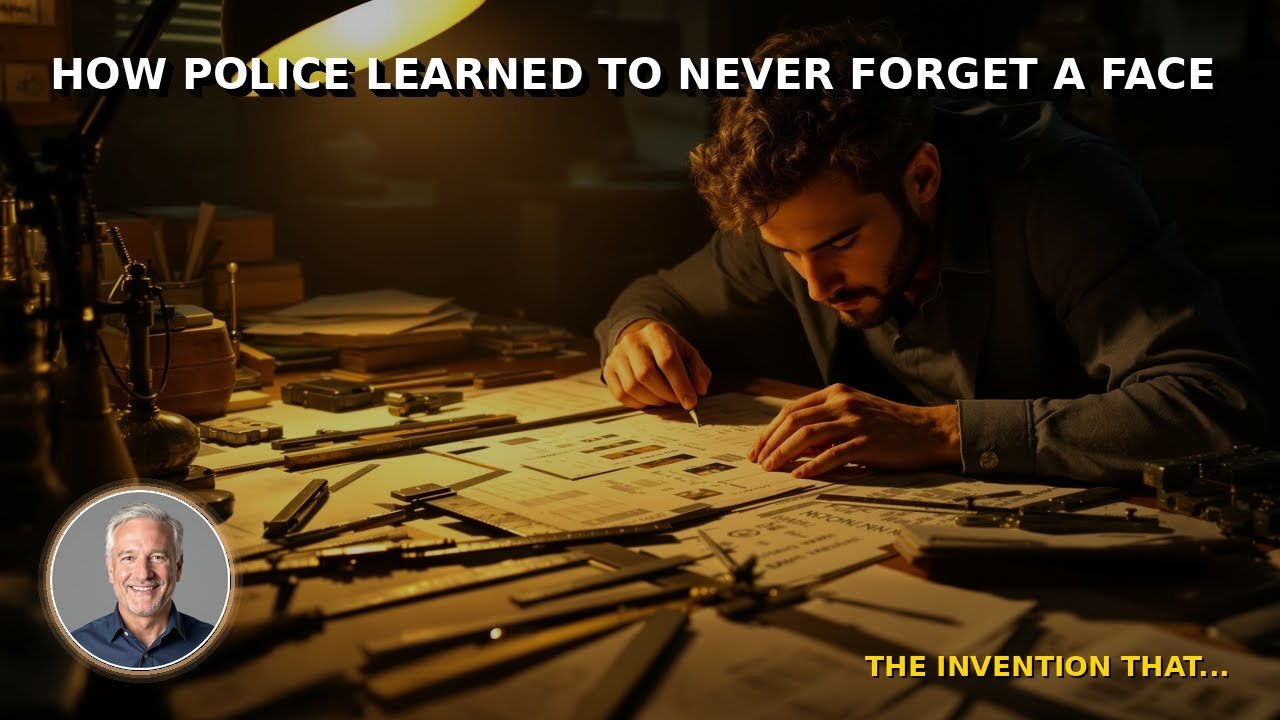
In 1879, a sickly twenty-six-year-old clerk named Alphonse Bertillon descended into the basement of the Paris Prefecture of Police and began doing something that had never been done before: he started measuring criminals. Not metaphorically. He measured their heads. Their arms. The length of their left foot. The width of their right ear. He recorded these measurements on index cards, filed them in a system he invented himself, and waited to see if the numbers would tell him something the human face could not.
They did. Within a decade, Bertillon had built the world’s first systematic criminal identification system — and solved more than ten thousand cases with it. He was lionized in France, imitated across Europe, adopted in the United States, and studied by every major police force in the Western world.
By the time J. Edgar Hoover finished reshaping the FBI’s institutional history in the 1920s and beyond, Alphonse Bertillon had been quietly, methodically erased from the American story of forensic science.
This is the history that got buried. And it matters more than you might expect.
The Clerk Who Had No Business Inventing Anything
Bertillon’s background offered no obvious qualification for scientific genius. He came from a family of statisticians and physicians — his father Louis-Adolphe Bertillon was a prominent demographer — but Alphonse himself had been a chronic academic failure. He was expelled from multiple schools, drifted through a series of unremarkable jobs, and eventually landed a clerical position at the Paris Prefecture of Police in 1879 largely through family connections.
His assignment was tedious by design: transcribing criminal records. In the 1870s, Parisian police identified repeat offenders the same way police everywhere did — by memory, by informants, and by the unreliable testimony of officers who claimed to recognize a face. The system failed constantly. Career criminals changed their names, altered their appearance, and walked out of courtrooms as first-time offenders while their real records gathered dust in another filing cabinet under another name.
Bertillon looked at this chaos and saw a data problem.
He had absorbed enough of his father’s statistical thinking to understand one crucial insight: while individual human features vary enormously, the combination of precise measurements across multiple body parts creates an identification signature that is, for all practical purposes, unique. No two people, he hypothesized, share the same head circumference and arm length and foot size and ear width. The more measurements you stack, the more specific the signature becomes.
He wrote up his idea. His superiors rejected it as the delusion of an untrained clerk.
He kept measuring anyway.
Bertillonage: How the System Actually Worked
The formal system Bertillon developed — which came to be called bertillonage, or the Bertillon system — relied on eleven primary measurements, all taken with calibrated instruments, all recorded with careful precision. These included the length and width of the head, the length of the left middle finger, the length of the left foot, the length of the left forearm, the height of the figure, the width of the outstretched arms, and several others.
Crucially, Bertillon recognized that human bone stops growing in early adulthood. After approximately twenty years of age, these measurements remain essentially stable for life. You could not diet your way out of your skull circumference. You could not exercise your way into a different forearm length.
He also introduced two innovations that would outlast his own system entirely. First, the standardized criminal photograph — front-facing and profile shots taken under controlled lighting at a fixed distance. What we now call the “mug shot” is Bertillon’s invention, unchanged in its essential logic for nearly 150 years.
Second, he developed a precise verbal description system called the portrait parlé — the “spoken portrait” — which reduced the description of a face to a standardized vocabulary of features. This allowed officers in different cities, or different countries, to communicate physical descriptions with enough precision that they actually matched the same person.
By 1883, just four years after he began his basement project, Bertillon had his first confirmed identification of a recidivist: a man who had given police a false name was matched to his prior arrest record through measurements alone. By 1892, the system was in official use across France. By the late 1890s, some form of bertillonage had been adopted in Argentina, Egypt, Britain, Canada, and the United States.
Francis Galton, Fingerprints, and the Shadow of Eugenics
The figure who would eventually displace Bertillon was Francis Galton, the British polymath and — it must be said plainly — the father of eugenics. Galton was a cousin of Charles Darwin, a fellow of the Royal Society, and a man of formidable intellect who nonetheless spent much of his career trying to prove that human beings could and should be selectively bred for favorable traits.
His interest in fingerprints was not initially about criminal identification. It was about heredity. Galton wanted to know whether fingerprint patterns were inherited — whether they could serve as markers of racial or familial lineage in ways useful to his eugenic research program.
What he found, documented in his 1892 book Finger Prints, was something more immediately practical: fingerprints are unique to each individual, they remain unchanged from birth to death, and they can be reliably classified into a workable taxonomy. Galton estimated the probability of two individuals sharing the same fingerprint at approximately 1 in 64 billion.
Galton never fully developed an operational classification system for police use. That fell to Edward Henry, the Inspector General of Police in British India, who published his Classification and Use of Finger Prints in 1900. By 1901, Scotland Yard had adopted the Henry system. By 1903, it was spreading through American police departments.
Bertillonage had a fatal vulnerability that fingerprinting did not: it required trained operators using calibrated instruments, and it was sensitive to human measurement error. A 1903 incident at the Kansas State Penitentiary — where two men named Will West and William West were found to have nearly identical Bertillon measurements but different fingerprints — became the legendary demonstration case that broke the system’s credibility in the United States.
The science had moved on. That part of the story is legitimate.
What happened next was something else entirely.
J. Edgar Hoover and the Rewriting of Forensic History
J. Edgar Hoover became director of the Bureau of Investigation in 1924, and the consolidation of fingerprint records became one of his first and most aggressive institutional projects. In 1924, the Bureau absorbed the fingerprint collection of the National Bureau of Criminal Identification, creating a centralized national fingerprint repository that Hoover would spend the next five decades expanding into an instrument of surveillance and power.
Hoover understood, with the instinct of a bureaucratic genius, that controlling the origin story of American forensic science meant controlling the legitimacy of the FBI itself. A narrative in which fingerprinting had always been the obvious, scientific, inevitable solution — developed by British researchers, refined by the Bureau — was a cleaner story than one that began with a French records clerk measuring forearms in a basement.
Bertillon’s name did not vanish overnight. But across decades of FBI publications, official histories, educational materials, and press releases, the contribution of bertillonage was progressively minimized, then characterized as a failed pseudoscience, then largely omitted. The Bureau’s own historiography positioned fingerprinting as the beginning of modern criminal identification, which allowed Hoover to position the FBI as its rightful custodian.
There was also, it should be noted, a political dimension. Bertillon himself had served as a handwriting expert in the Dreyfus Affair — the 1894 French military scandal in which a Jewish army officer was wrongly convicted of treason, partly on the basis of Bertillon’s catastrophically incorrect graphological analysis. Bertillon’s credibility suffered enormously from this association, which died with him in 1914. Hoover’s institutional historians were not above exploiting that taint.
What the Erasure Actually Cost
The suppression of Bertillon’s legacy is not merely an injustice to a dead Frenchman. It represents a broader pattern in the history of science and law enforcement: the tendency to rewrite the past in the image of the present, to make current practice look like inevitable destiny rather than contested, contingent, human invention.
This matters practically. Bertillon’s portrait parlé — the standardized verbal description system — was never fully replaced. American police departments fumbled with inconsistent description vocabularies for decades after bertillonage fell out of use, in part because the institutional memory of what Bertillon had actually built had been disrupted. His mug shot standards, divorced from his name, became institutional habit without institutional understanding.
More broadly, the story of bertillonage is a reminder that criminal identification systems are not neutral scientific instruments. They are built by specific people, in specific institutional contexts, for specific purposes, with specific blind spots. Galton’s fingerprint research emerged from a eugenic research program. The FBI’s fingerprint repository was built partly as a tool of political surveillance. Bertillon’s own system was used by the Vichy regime during World War II to identify Jewish citizens for deportation.
None of this makes the underlying science invalid. But it makes the history of that science something worth knowing accurately.
The Longer Shadow: Scientific History as Institutional Property
The Bertillon case is not unique. The history of science is littered with figures whose contributions were minimized, absorbed, or erased by institutions that needed a cleaner founding myth. What distinguishes the Bertillon erasure is the deliberateness of it — the extent to which a powerful, well-resourced American institution systematically cultivated a version of history that served its interests.
The FBI that Hoover built was not the only organization to behave this way. It was simply unusually effective at it.
We are living through a moment when forensic science is under significant pressure — when DNA evidence is being re-examined, when facial recognition algorithms are being challenged, when the certainty we attributed to fingerprint analysis itself is being questioned by researchers who have found meaningful error rates in examiner judgments. The foundational question Bertillon asked in that Paris basement — how do we know that this person is the same person we arrested before? — has never been more alive.
The answer to that question has always depended not just on the science but on the institutions that hold the science, fund the science, and tell the story of how the science came to be.
Alphonse Bertillon deserves to be remembered not because his system was perfect — it wasn’t — but because the impulse to erase him tells us something important about who gets to own the past.
And about what gets buried when the answer to that question is: whoever has the filing cabinet.