The Civil War Veteran Who Accidentally Created the World’s Most Famous Secret Formula
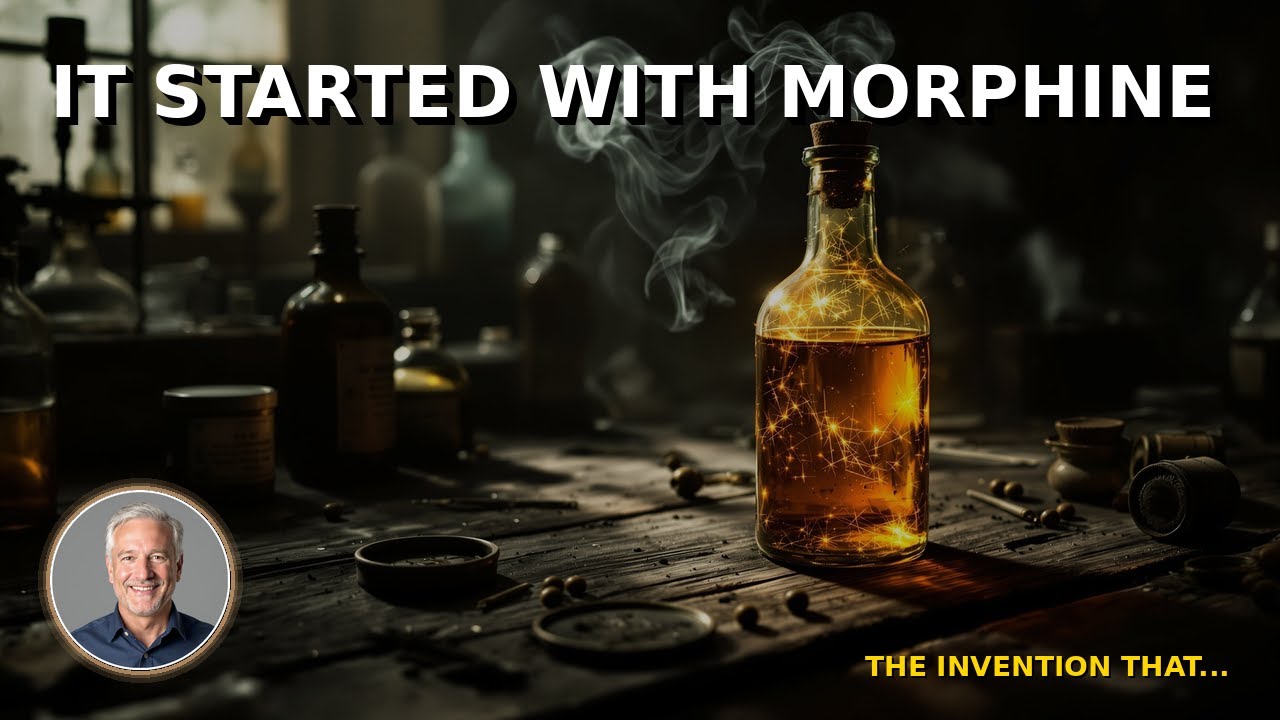
In 1886, a morphine-addicted Confederate veteran stumbled upon what would become the most recognizable brand on Earth. John Stith Pemberton, mixing compounds in his Atlanta pharmacy, had no idea his experimental headache remedy would one day be consumed 1.9 billion times daily across the globe. The tragic irony? Pemberton died penniless in 1888, having sold his final stake in Coca-Cola just months before his death, never witnessing the empire that emerged from his accidental invention.
This is the untold story of how America’s most famous secret formula was born from the desperate attempts of a war-wounded pharmacist to cure his own addiction — and how a temperance-era patent medicine evolved into a corporate colossus that would define American capitalism for generations.
The Making of an Accidental Inventor
John Stith Pemberton’s path to immortality began with personal tragedy. Born in 1831 in Knoxville, Georgia, Pemberton had established himself as a successful pharmacist and businessman by the 1850s. His early ventures into patent medicines — those dubious cure-alls that dominated 19th-century pharmacy shelves — showed promise. He created popular remedies like “Pemberton’s Liver Pills” and “Globe of Flower Cough Syrup,” building a modest fortune in Columbus, Georgia.
The Civil War shattered this comfortable existence. Enlisting as a Confederate cavalry officer, Pemberton suffered a severe saber wound to the chest during the Battle of Columbus in April 1865 — one of the war’s final engagements. The injury left him in chronic pain and, like thousands of wounded veterans, dependent on morphine for relief.
This addiction would dominate the final decades of Pemberton’s life, driving him to experiment desperately with alternative pain remedies. In an era when medical understanding of addiction remained primitive, Pemberton’s search for a morphine substitute led him down a path of increasingly elaborate chemical experiments.
From Patent Medicine to Global Phenomenon
By 1885, Pemberton had relocated to Atlanta, drawn by the city’s emergence as a commercial hub during Reconstruction. His laboratory, located at 107 Marietta Street, became the site of frantic experimentation as he sought both financial recovery and personal healing through chemistry.
The temperance movement was gaining momentum across the South, and Atlanta had enacted prohibition laws that made alcohol-based medicines problematic. This constraint proved crucial to Pemberton’s most famous creation. His initial experiments with coca leaves and kola nuts produced “Pemberton’s French Wine Coca,” a beverage marketed as a nerve tonic and brain elixir. When Atlanta’s prohibition laws threatened this alcohol-based formula, Pemberton reformulated his creation into a syrup mixed with carbonated water.
On May 8, 1886, the first glass of what would become Coca-Cola was served at Jacob’s Pharmacy in downtown Atlanta. The timing was fortuitous — carbonated beverages were becoming popular as safer alternatives to often-contaminated water supplies in American cities.
The Man Behind the Brand
Frank Mason Robinson, Pemberton’s business partner and bookkeeper, contributed the element that would prove most enduring: the name and distinctive script logo. Robinson suggested “Coca-Cola,” noting that “the two Cs would look well in advertising.” His Spencerian script design, flowing and elegant, would become one of the most recognizable logos in human history.
Robinson’s marketing instincts proved remarkably prescient. In 1886, he placed the first Coca-Cola advertisement in the Atlanta Journal, describing it as a “Delicious! Refreshing! Exhilarating! Invigorating!” beverage. This emphasis on emotional benefits rather than medical claims would become a hallmark of modern consumer marketing.
The original formula contained extracts from coca leaves and caffeine from kola nuts — a combination that provided a mild stimulant effect. While the exact recipe remains one of the world’s most guarded trade secrets, historians estimate the original formula contained approximately 8.46 milligrams of cocaine per serving, removed entirely by 1929.
The Transfer of an Empire
Pemberton’s morphine addiction and deteriorating health prevented him from recognizing his creation’s potential. In 1887, facing financial pressure and declining health, he began selling stakes in his formula to various Atlanta businessmen. The most significant buyer was Asa Griggs Candler, a fellow pharmacist with keen business acumen.
Candler, born in 1851 in Villa Rica, Georgia, had built a successful pharmaceutical business and possessed the marketing vision Pemberton lacked. Between 1888 and 1891, Candler systematically acquired complete control of the Coca-Cola formula and brand, paying Pemberton’s estate and other stakeholders a total of approximately $2,300 — roughly $70,000 in today’s currency.
Pemberton died on August 16, 1888, at age 57, having received only $1,750 for his share of the rights to Coca-Cola. He was buried in Atlanta’s Linwood Cemetery, his grave unmarked for nearly a century until the Coca-Cola Company finally erected a monument in 1958.
Candler’s Vision Realized
Under Candler’s leadership, Coca-Cola transformed from a local curiosity into a national phenomenon. Candler understood that the beverage’s appeal lay not in its medicinal claims but in its taste and refreshing qualities. He invested heavily in advertising, spending $11,000 on promotion in 1891 alone — an enormous sum for the era.
Candler’s masterstroke was establishing a bottling network. In 1899, he sold the bottling rights to Benjamin Thomas and Joseph Whitehead for one dollar, retaining syrup production while enabling rapid national expansion. This decision, seemingly modest at the time, created the distribution system that would carry Coca-Cola to every corner of the globe.
By 1895, Coca-Cola was sold in every state and territory. Candler’s marketing innovations included promotional items like calendars, clocks, and serving trays featuring the distinctive logo — early examples of brand merchandising that would become standard corporate practice.
The Secret Formula’s Evolution
The original Coca-Cola formula underwent significant changes as the product evolved from patent medicine to consumer beverage. The most dramatic shift came with the removal of cocaine-containing coca leaf extracts, completed by 1929 as public awareness of cocaine’s dangers grew.
The formula’s secrecy became both marketing tool and corporate obsession. Candler deliberately limited knowledge of the complete recipe to a handful of executives, a practice continued by subsequent owners. This mystique transformed a simple beverage recipe into one of the world’s most famous trade secrets, generating publicity value far exceeding any protection the secrecy actually provided.
Modern Parallels and Enduring Lessons
The Coca-Cola origin story illuminates broader patterns in American innovation and corporate development. Pemberton’s accidental discovery parallels other transformative inventions born from personal necessity — from Post-it Notes (a failed super-strong adhesive) to penicillin (contaminated bacterial cultures).
The transformation from medicinal compound to consumer brand reflects the broader evolution of American business in the late 19th century, as companies learned to market experiences and emotions rather than mere products. Candler’s advertising strategies anticipated modern consumer psychology, emphasizing refreshment and pleasure over health claims.
Perhaps most significantly, the Coca-Cola story demonstrates how individual innovation intersects with broader social forces. The temperance movement, urbanization, improved transportation networks, and emerging consumer culture all contributed to creating conditions where Pemberton’s accidental discovery could flourish.
Today, as the Coca-Cola Company faces challenges from health consciousness and environmental concerns, the brand’s origins remind us that even the most successful innovations must continuously adapt to changing social contexts. Pemberton’s morphine-addled experiments in a modest Atlanta laboratory created not just a beverage, but a template for global brand building that continues to influence corporate strategy more than 130 years later.
The ultimate tragedy remains that John Stith Pemberton, seeking relief from the physical and psychological wounds of America’s defining conflict, created something that would outlast empires — but never lived to understand the magnitude of his accidental genius.