The Accidental Invention That Changed Every Kitchen: How Radar Technology Created the Microwave Oven
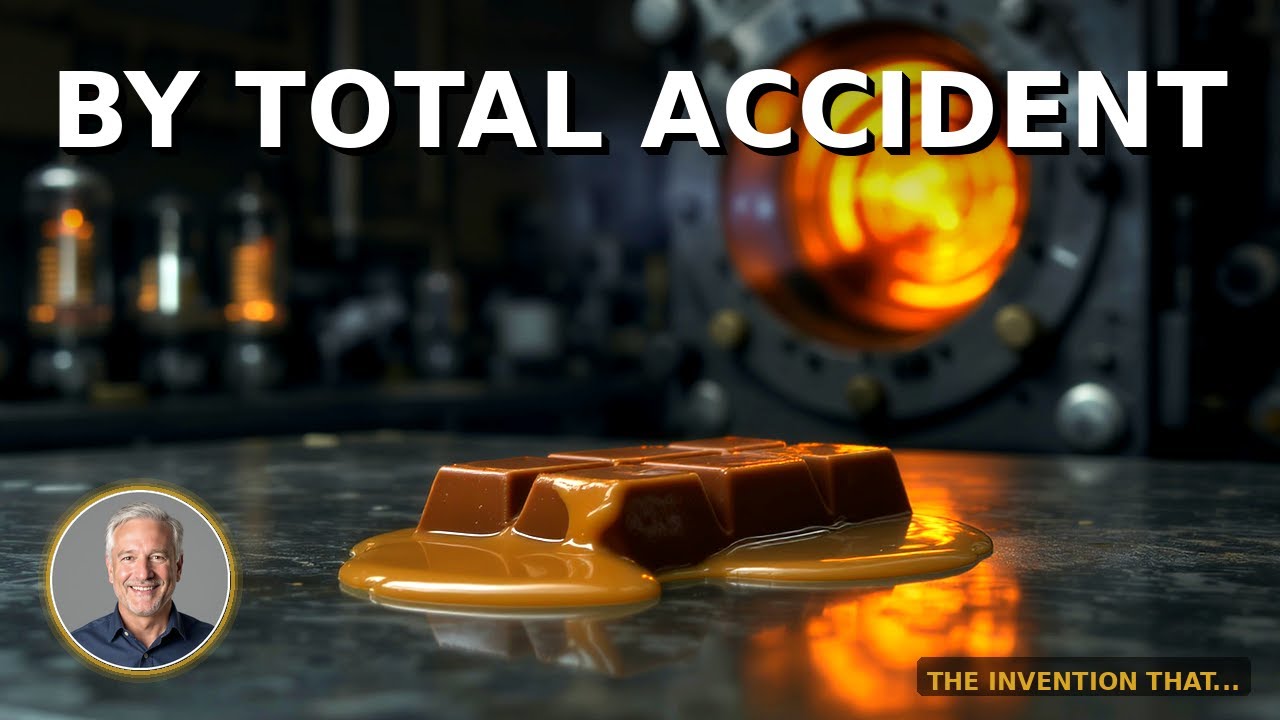
In the autumn of 1945, a self-taught engineer named Percy Spencer walked past a magnetron tube in a Raytheon laboratory in Waltham, Massachusetts, and noticed something unremarkable. The chocolate bar in his shirt pocket had melted.
Most people would have cursed the mess, tossed the wrapper, and moved on.
Spencer stopped and asked why.
That pause — that single moment of curiosity from a man who had never spent a single day inside a college classroom — launched an invention that would eventually appear in more than 90 percent of American homes and fundamentally alter how billions of people across the planet prepare food. The microwave oven was not engineered through years of deliberate research. It was not the product of a well-funded government initiative or a corporate innovation program. It was an accident, recognized by someone who had spent a lifetime teaching himself how the physical world worked.
Percy Spencer: The Self-Taught Genius Behind the Discovery
Before examining the invention itself, it is worth dwelling on the man, because Percy Spencer’s biography reads less like the résumé of a revolutionary inventor and more like a story someone might invent to prove a point about human potential.
Spencer was born in 1894 in Howland, Maine. His father died when Percy was eighteen months old. His mother, unable to care for him, left him with relatives. By the time he was seven, his uncle — the man who had taken him in — was also dead. Spencer entered the workforce at twelve years old, working at a spool mill. He never graduated from grammar school. The formal educational system, by any conventional measure, had essentially nothing to do with his development.
What Percy Spencer had instead was a library card and an insatiable appetite for understanding.
He taught himself trigonometry. Then calculus. Then chemistry, physics, and metallurgy — working through textbooks at night after long days of physical labor. When he joined the United States Navy and became fascinated with the emerging technology of wireless telegraphy, he taught himself that too. By 1912, he had become one of three survivors of the Titanic disaster’s radio team, training personnel who would later play roles in the rescue response — a fact that underscores how early and seriously he had mastered wireless communication.
Spencer joined Raytheon in the 1920s. By 1945 — the year of the melted chocolate bar — he held 150 patents. Raytheon’s director of research, Laurence Marshall, knew exactly what kind of mind he had on his payroll. What neither man fully understood, at that moment, was the domestic revolution about to emerge from a military laboratory.
The Magnetron, the Chocolate Bar, and the Moment Everything Changed
The context for Spencer’s discovery matters. Raytheon, in 1945, was deeply embedded in radar technology development for military applications. The magnetron — a vacuum tube that generates microwave-frequency electromagnetic radiation — was the core component of radar systems that had proven decisive during the Second World War. Spencer and his colleagues worked with magnetrons routinely. They were tools of war, not kitchen appliances.
The accidental discovery occurred when Spencer stood near an active magnetron and noticed that the chocolate bar in his pocket had softened and melted. This observation, in itself, was not entirely unprecedented — other engineers had reportedly noticed warmth near operating magnetrons. What distinguished Spencer was his response.
Rather than dismissing the phenomenon, he began experimenting systematically. He started with popcorn kernels, which became the first deliberately microwave-popped popcorn in history. Then, in what colleagues later described as a memorably dramatic moment, Spencer directed microwave energy at an egg. The egg exploded — reportedly in the face of a nearby engineer, a detail that history has preserved with some pleasure.
Spencer had confirmed what physics suggested: microwave radiation at the right frequency causes water molecules within food to oscillate rapidly, generating internal heat with a speed and uniformity that conventional ovens cannot replicate. He had not discovered a new physical principle. He had recognized, with the disciplined curiosity of a lifelong autodidact, that an existing principle had a practical application no one had yet exploited.
From Military Laboratory to Kitchen Counter: The Long Road to Adoption
Raytheon filed a patent for the microwave cooking process in 1945, and by 1947, the company had produced the first commercially available microwave oven. It was called the Radarange — a name that preserved the technology’s military lineage with a certain corporate pride. Laurence Marshall oversaw the commercialization effort, bringing Spencer’s discovery to market with characteristic Raytheon ambition.
The first Radarange was, by any modern standard, absurdly impractical as a consumer product. It stood approximately six feet tall. It weighed 750 pounds. It required a water-cooling system. And it cost approximately $5,000 — roughly $65,000 in today’s currency. Initial sales were directed at restaurants, ocean liners, and railroad dining cars: institutional settings where speed of food preparation had clear economic value and where a 750-pound appliance could be accommodated.
Consumer adoption was not merely slow. It was, for more than a decade, essentially nonexistent.
Why Americans Were Terrified of the Microwave Oven
The public distrust that surrounded microwave ovens through the 1950s and into the 1960s deserves more serious historical attention than it typically receives. Understanding that distrust illuminates something important about how societies absorb technological disruption.
Three distinct anxieties converged on the microwave oven during these decades.
The first was radiation fear. The atomic bombings of Hiroshima and Nagasaki in 1945 — the same year Spencer made his discovery — had embedded radiation as a concept of existential terror in the American public consciousness. Nuclear testing throughout the 1950s intensified that anxiety. When manufacturers and marketers tried to explain that microwave ovens used electromagnetic radiation rather than ionizing radiation — that they were fundamentally different in kind from nuclear technology — they were fighting a losing semantic battle against justified public fear and decades of civil defense propaganda.
The second anxiety was nutritional uncertainty. Consumers and, importantly, nutritionists raised genuine questions about whether microwave cooking altered food at a molecular level in ways that might be harmful. These concerns were not entirely unreasonable given how little was publicly understood about the technology, though subsequent research found no credible evidence of harmful nutritional changes specific to microwave preparation.
The third anxiety was perhaps the most culturally revealing: the sense that microwave cooking was somehow cheating. Traditional cooking carried deep social meaning — the hours spent over a stove represented care, skill, and devotion. Something that could heat a meal in minutes felt, to many consumers, like a corruption of that cultural ritual rather than an improvement upon it.
These anxieties combined to delay mass adoption by roughly two decades.
How the Microwave Finally Won
The turning point came in the late 1960s and accelerated through the 1970s. Smaller, cheaper, countertop models began appearing — the result of continued miniaturization of magnetron technology and intensified competition, particularly from Japanese manufacturers. By 1967, Raytheon’s subsidiary Amana introduced a countertop model priced at $495 (approximately $4,300 today), dramatically more accessible than the original Radarange.
Then the social landscape shifted in ways that made the microwave’s core value proposition irresistible. Women entered the workforce in dramatically increasing numbers through the 1970s. Dual-income households became the norm rather than the exception. The time available for meal preparation contracted sharply. The microwave oven stopped being a curiosity that threatened domestic ritual and started being a practical solution to a genuine daily problem.
By 1975, microwave oven sales in the United States surpassed sales of gas ranges for the first time. By 1986, roughly 25 percent of American households owned one. By the early 2000s, that figure had climbed past 90 percent.
The invention that had terrified, baffled, and been dismissed as a gimmick for twenty years had become, within another twenty, as standard a kitchen fixture as the refrigerator.
The Broader Pattern: Accidental Invention and the Prepared Mind
Percy Spencer’s story belongs to a recognizable pattern in the history of technology — what historians of science sometimes call serendipitous discovery guided by prepared observation. The famous formulation, attributed to Louis Pasteur, holds that chance favors the prepared mind. Spencer’s mind was extraordinarily prepared, not by formal education, but by decades of self-directed, relentlessly curious engagement with how things work.
The microwave oven shares this accidental lineage with discoveries like penicillin (Alexander Fleming, 1928), vulcanized rubber (Charles Goodyear, 1839), and X-rays (Wilhelm Röntgen, 1895). In each case, the discoverer’s contribution was not the accident itself but the recognition of what the accident revealed.
What distinguishes Spencer’s story from many of these others is the social context of his background. The formal gatekeeping systems of education had no role in producing one of the twentieth century’s most consequential kitchen inventors. Spencer arrived at his discovery through a path that the credentialing systems of his era would not have predicted or supported.
That remains, in 2024, a genuinely provocative fact — and a useful one. In an era that frequently conflates formal education with capability, Spencer’s biography insists on a more complicated and more generous accounting of human potential.
A Question Worth Sitting With
The microwave oven debate that occasionally surfaces in food culture discussions — whether it represents genuine culinary progress or merely convenient nutritional compromise — is worth engaging seriously rather than dismissing as nostalgia.
There are real tradeoffs. Microwave cooking, for all its speed and energy efficiency, does not replicate the Maillard reaction — the complex browning process that gives roasted, grilled, and oven-baked foods their depth of flavor. Steam-heating food rapidly is not the same as transforming it slowly through sustained heat exposure. What the microwave offers in time, it sometimes surrenders in texture and complexity.
And yet: the alternative framing — that microwave cooking simply made people lazier in the kitchen — tends to romanticize a past in which home cooking was profoundly gendered labor, largely invisible, and frequently exhausting. The microwave did not create convenience culture. It responded to the real time constraints of modern working life with a technology that Spencer, had he lived to see its full adoption, might reasonably have considered his finest contribution.
One hundred fifty patents. No grammar school diploma. A melted chocolate bar in a military laboratory.
The kitchen on your countertop has a stranger and more remarkable origin story than most people will ever know.
This article accompanies the documentary episode “The Invention That Changed Every Kitchen — By Total Accident.” All historical figures, dates, and technical details reflect the available historical record as of publication.