What Happened to Bed Bath & Beyond? The Rise, Collapse, and Strange Afterlife of an American Retail Icon
For most of its life, Bed Bath & Beyond seemed indestructible. At its peak, the company operated nearly 1,500 stores across the United States and Canada, generated billions in annual revenue, and held a near-monopoly on the particular American anxiety of furnishing an apartment for the first time. Its stores were deliberately overwhelming — ceiling-high shelving stacked with every conceivable variety of pillow, pot, and picture frame — and its customers were loyal in the way that people are loyal to a place they always knew would be there.
Then they discovered that loyalty had never really existed. What looked like a relationship was actually a transaction, and the terms of that transaction were printed on a big blue coupon.
From Linen Superstore to National Institution: 1971–2000
Warren Eisenberg and Leonard Feinstein opened their first store in 1971 in Springfield, New Jersey, under the considerably less memorable name Bed ’n Bath. The concept was straightforward and, at the time, genuinely novel: a deep-discount superstore dedicated entirely to domestic goods — bedding, towels, cookware, bathroom accessories — sold at prices that undercut traditional department stores.
The format worked. By the time the company went public in 1992 and rebranded as Bed Bath & Beyond, it was expanding aggressively across the country, riding the same demographic wave that lifted Target and Home Depot: suburban homeownership, dual-income households, and a growing American appetite for domesticity-as-lifestyle. The stores were enormous, intentionally so. The sheer volume of inventory communicated abundance and value in a way that no advertisement could replicate.
By 2000, Bed Bath & Beyond was widely regarded as one of the most successful specialty retailers in the country. Eisenberg and Feinstein had built something that genuinely served its customers. The trouble was what they built next.
The Coupon That Ate the Company
At some point in the early 2000s, Bed Bath & Beyond began mailing 20-percent-off coupons to its customers. This was not unusual. Retailers had used promotional coupons for decades. What was unusual — and what would ultimately prove catastrophic — was the way Bed Bath & Beyond administered them.
The coupons had no expiration date that was meaningfully enforced. They were accepted well past their printed dates, accepted in stacks, accepted whether they had been torn from a mailer or downloaded from the internet or simply photographed on a customer’s phone screen. Store employees were instructed to honor them without argument. The company mailed them with extraordinary frequency, sometimes weekly.
The intention was presumably to drive traffic. The effect, over years and then a decade and then longer, was to systematically train millions of customers never to pay full price for anything. Shoppers did not experience 20 percent off as a discount. They experienced full price as a penalty for forgetting to bring a coupon. The psychological reframing was total and irreversible.
By the mid-2010s, the coupon program was costing the company an estimated $1 billion annually in foregone revenue. Executives understood the problem. They discussed it, analyzed it, and largely declined to address it, because every time the coupon flow slowed, sales slipped, and the solution seemed more frightening than the disease.
When new CEO Mark Tritton finally moved aggressively to curtail the program in 2019 and 2020 — part of a broader modernization strategy — he discovered the full dimensions of what had been built. Sales did not dip. They collapsed. The company had not cultivated customer loyalty over those twenty-plus years. It had cultivated coupon dependency. Those are different things, and the difference turned out to be fatal.
The Tritton Era and the Private Label Gamble
Mark Tritton arrived in 2019 from Target, where he had overseen a successful private-label strategy, and Bed Bath & Beyond’s board hired him to execute something similar. The logic was defensible: private-label goods carry higher margins than branded merchandise, and a company bleeding money on coupons desperately needed margin recovery.
The execution was a disaster. Tritton moved quickly to eliminate dozens of national brands that customers specifically came to the store to buy, replacing them with proprietary lines that customers had no particular reason to prefer. The company launched eight new private-label brands in roughly two years. Customers noticed what was missing from the shelves before they noticed what had been added.
The timing compounded everything. The COVID-19 pandemic created supply chain chaos. The housing market surged briefly, then stalled. Inflation squeezed household budgets. Tritton was fired in June 2022 with the company’s stock already in freefall.
Ryan Cohen, the Meme Stock Moment, and the Final Act
In early 2022, Ryan Cohen — the founder of Chewy and, at that point, a newly minted activist investor best known for his GameStop campaign — disclosed a significant stake in Bed Bath & Beyond and began pushing for strategic changes, including a potential sale of buybuy BABY, the company’s subsidiary chain. The announcement ignited a meme stock frenzy. Retail investors on Reddit’s WallStreetBets flooded into the stock, driving it from under $5 per share to nearly $30 in a matter of weeks.
Cohen sold his entire position in August 2022, reportedly pocketing a profit of approximately $68 million. The stock immediately cratered. Cohen’s exit was legal; whether it was responsible remains a matter of ongoing debate. What is not debatable is the effect: retail investors who had held through the peak suffered enormous losses, and the company itself was left more exposed than before, its fundamental problems unchanged and its credibility with institutional investors essentially gone.
The episode illustrated something important about the meme stock phenomenon: it does not save companies. It creates a brief, violent price distortion that tends to benefit those who understand it is distortion and exit accordingly, while leaving behind a wreckage that the underlying business still has to navigate.
A Death in the Boardroom
Any honest accounting of Bed Bath & Beyond’s final months has to include what happened on September 2, 2022. Gustavo Arnal, the company’s Chief Financial Officer, died after falling from his apartment building in New York City. He was 52 years old. His death was ruled a suicide. Arnal had been named in a lawsuit alleging stock manipulation related to the meme stock episode, though no findings of wrongdoing had been made.
The human dimension of this story resists easy summarizing. Corporate collapse is typically narrated in the language of strategy and capital allocation. Arnal’s death is a reminder that these institutions are made of people, and that when they fail, the failure lands on individuals in ways that quarterly reports do not capture.
Bankruptcy, Liquidation, and the $21.5 Million Name
Bed Bath & Beyond filed for Chapter 11 bankruptcy in April 2023. By August of that year, all remaining stores had closed — roughly 360 locations at the time of filing. The liquidation sales drew long lines of shoppers, which felt, to anyone paying attention, like a particularly American form of mourning: we come to see things off when it is too late to matter.
The company’s physical assets were sold or abandoned. buybuy BABY was acquired separately. And then, in a transaction that captured something essential about the modern retail economy, the Bed Bath & Beyond trademark, website, and customer database were purchased for approximately $21.5 million by Overstock.com.
Overstock, an online liquidation retailer that had been quietly struggling with its own identity, rebranded entirely as Bed Bath & Beyond — keeping none of the original company’s inventory, supply relationships, or physical stores, but inheriting its name recognition and email list. It was, depending on your perspective, either ingeniously pragmatic or a kind of brand taxidermy.
2026: Fort Worth and the Question of Resurrection
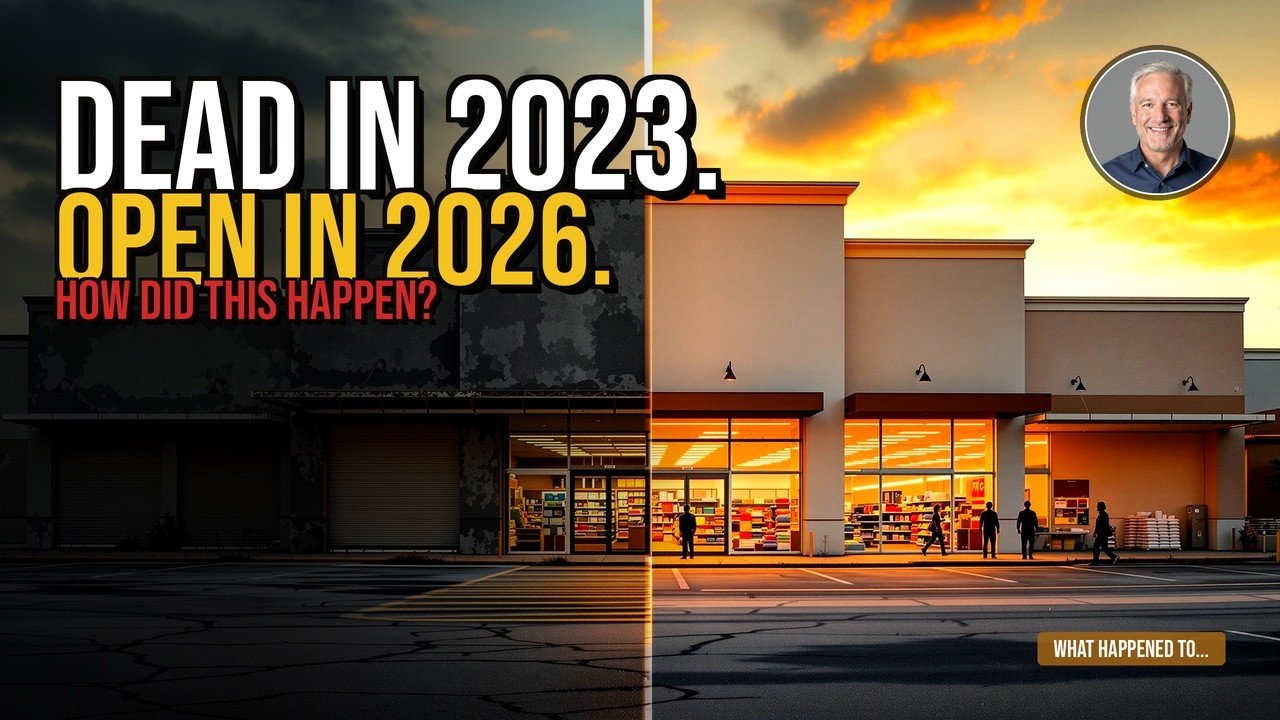
The most recent chapter in this story takes place in Fort Worth, Texas, where a physical Bed Bath & Beyond store opened in 2026. The store operates under a licensing arrangement and shares space with another resurrected brand, representing a model that some retail analysts have begun calling the “zombie brand” strategy: purchase a name with residual recognition, attach it to new physical or digital infrastructure, and see whether the emotional memory of the original survives the transplant.
It is genuinely unclear whether it does. The Fort Worth store has no operational continuity with the Union, New Jersey original. The founders are not involved. The employees, the merchandise relationships, and the institutional knowledge are entirely new. What survives is a logo and a name that still means something to a generation of Americans who furnished their first apartments there.
Whether that constitutes resurrection or impersonation is not a question with a clean answer. It may depend on what you think a retail brand actually is.
What Bed Bath & Beyond Teaches Us About American Retail
The Bed Bath & Beyond story is frequently told as a tale of mismanagement, and mismanagement was certainly present. But the deeper pattern is more structural and more interesting.
The company’s core problem — training customers to expect permanent discounts — is a version of something that has destabilized retailers from Sears to JCPenney to Kohl’s. The promotional cycle is easy to start and nearly impossible to stop. Each discount drives traffic that justifies the next discount. The margin erosion is gradual enough to ignore until it is not.
The meme stock episode connects to a separate but related pattern: the way activist investors and retail trading communities can temporarily inflate the value of a distressed company without addressing — and sometimes while accelerating — its underlying deterioration. GameStop is still open. Bed Bath & Beyond is not. The difference is probably real estate and a core customer base that never fully abandoned ship.
What happened to Bed Bath & Beyond is, in the end, a story about the difference between customer behavior and customer loyalty — and about how long a company can confuse the two before the confusion becomes catastrophic. The coupon kept the registers ringing long past the point where the relationship was genuinely healthy. When the coupon went away, so did the customer.
The name survived. Whether anything else did is the question the Fort Worth store is still trying to answer.