The BlackBerry Empire: How the World’s Most Important Phone Lost Everything
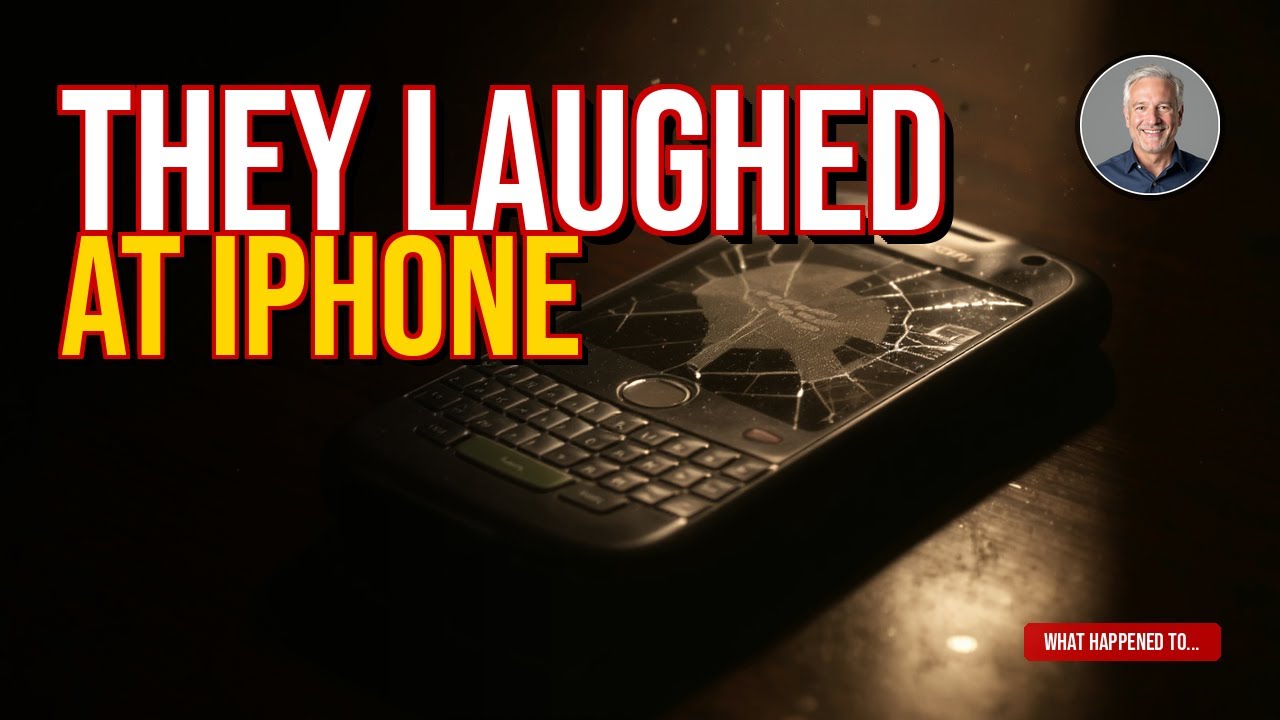
In January 2007, Steve Jobs stood on stage at Macworld and declared that Apple would “reinvent the phone.” In the audience of millions watching the livestream were executives from Research In Motion (RIM), the Canadian company behind BlackBerry. Their reaction? Laughter.
They had good reason to be confident. BlackBerry wasn’t just another phone company—it was the nervous system of global business and government. With 80 million subscribers and 50% of the US smartphone market by 2009, BlackBerry devices were so essential to Wall Street trading floors that the SEC had to issue special guidance when the service went down. President Obama famously fought Secret Service protocols just to keep his BlackBerry in the White House.
Yet by 2016, BlackBerry’s smartphone market share had collapsed to less than 0.1%. The company that invented push email and secure mobile messaging—technologies we now take for granted—had become a cautionary tale of how quickly technological dominance can evaporate.
The Birth of Mobile Business Computing
The BlackBerry story begins in 1999 in Waterloo, Ontario, where two ambitious entrepreneurs, Mike Lazaridis and Jim Balsillie, were building something that had never existed before: a device that could send and receive email anywhere, anytime. While other companies focused on voice calls, RIM recognized that business professionals needed constant access to their digital communications.
The original BlackBerry 850, launched in January 1999, wasn’t even technically a phone—it was a two-way pager. But it solved a problem that no one else was addressing: how to stay connected to the office while away from your desk. The device’s distinctive QWERTY keyboard and the satisfying click of its keys would become iconic, earning BlackBerry devices the nickname “CrackBerry” for their addictive nature.
What made BlackBerry revolutionary wasn’t just the hardware—it was the infrastructure. RIM built an entire ecosystem around secure, encrypted email delivery through their proprietary BlackBerry Enterprise Server (BES). Unlike consumer email services, BES offered military-grade encryption and real-time synchronization that made it indispensable for corporations and government agencies.
The Golden Age of BlackBerry Dominance
Between 2003 and 2009, BlackBerry transformed from a business tool into a cultural phenomenon. The introduction of the BlackBerry 7290 in 2003 brought phone capabilities to the platform, creating the first true smartphone that business users actually wanted to carry.
BlackBerry’s growth during this period was staggering:
- 2003: 1 million subscribers
- 2005: 4 million subscribers
- 2007: 12 million subscribers
- 2009: 50 million subscribers worldwide
The device became a status symbol on Wall Street, in Hollywood, and in the halls of Congress. BlackBerry Messenger (BBM), launched in 2005, created the first truly mobile instant messaging platform, complete with read receipts and group chats—features that wouldn’t appear on other platforms for years.
Mike Lazaridis, the engineering visionary behind BlackBerry’s technical innovations, focused obsessively on battery life, security, and email efficiency. Meanwhile, Jim Balsillie, the business strategist, aggressively expanded into new markets and fought patent battles that established BlackBerry’s intellectual property fortress.
The iPhone Moment: January 9, 2007
When Steve Jobs unveiled the original iPhone at Macworld 2007, the immediate reaction from BlackBerry executives was dismissive—and understandably so. From a technical perspective, the iPhone seemed almost primitive compared to BlackBerry’s offerings:
- Battery life: 5 hours of talk time versus BlackBerry’s all-day endurance
- Email: Basic consumer email versus BlackBerry’s enterprise-grade push email
- Security: Minimal encryption versus BlackBerry’s government-approved security
- Typing: An unproven touchscreen keyboard versus BlackBerry’s beloved physical keys
- Network: AT&T’s spotty 2.5G network versus BlackBerry’s optimized data compression
Internal RIM emails from 2007, later revealed in court documents, show executives questioning who would want to watch movies on their phone or browse the web with such a poor data connection. They calculated that the iPhone’s power-hungry processor and large screen would require constant charging—a dealbreaker for business users.
The Strategic Miscalculation
BlackBerry’s leadership made a fundamental error in assessing the iPhone’s threat: they evaluated it as a business tool rather than a consumer revolution. Lazaridis and Balsillie couldn’t envision that consumers would eventually drive smartphone adoption rather than enterprises.
The iPhone wasn’t trying to be a better BlackBerry—it was creating an entirely new category. While BlackBerry optimized for email and messaging, Apple prioritized web browsing, media consumption, and apps. The App Store, launched in July 2008, transformed the iPhone from a communication device into a portable computer platform.
BlackBerry’s response was telling. The BlackBerry Storm, launched in November 2008 as their iPhone competitor, attempted to combine BlackBerry’s business features with a touchscreen interface. The device was a commercial and critical failure, with a buggy operating system and a “SurePress” touchscreen that required users to physically click the screen—a compromise that satisfied no one.
The Beginning of the End: The Rise of Android
While BlackBerry focused on competing with Apple’s premium iPhone, Google’s Android platform began attacking from below. Android offered iPhone-like capabilities at lower price points across multiple manufacturers. Samsung, HTC, and Motorola flooded the market with Android devices that provided good-enough web browsing and email at prices BlackBerry couldn’t match.
By 2010, the smartphone market had fundamentally shifted:
- Consumer demand drove purchasing decisions, even in enterprises
- App ecosystems became more important than email optimization
- Touchscreen interfaces became the expected standard
- Carrier subsidies favored devices with mass consumer appeal
BlackBerry’s subscriber numbers continued growing through 2011, reaching their peak of 85 million users. But this growth was increasingly concentrated in international markets with price-sensitive consumers, while their profitable enterprise customers in North America began defecting to iPhones and Android devices.
The Final Collapse: 2011-2016
The launch of BlackBerry 10 in January 2013 represented the company’s last serious attempt to reclaim smartphone leadership. The new operating system was technically impressive, featuring innovative gesture controls and excellent multitasking capabilities. But it arrived six years after the iPhone, and the mobile ecosystem had already solidified around iOS and Android.
The numbers tell the story of BlackBerry’s rapid collapse:
- Q1 2011: 13.2% global smartphone market share
- Q1 2012: 6.7% global smartphone market share
- Q1 2013: 2.9% global smartphone market share
- Q1 2014: 0.6% global smartphone market share
By 2013, internal power struggles between Lazaridis and Balsillie had paralyzed decision-making at the company. Both founders departed, and new CEO Thorsten Heins attempted to salvage the smartphone business while exploring strategic alternatives.
BlackBerry’s Second Act: Cybersecurity and Software
Rather than fade into obscurity, BlackBerry executed one of the most successful corporate pivots in technology history. Under CEO John Chen, who took over in November 2013, the company gradually exited hardware manufacturing and focused on software and cybersecurity services.
Today’s BlackBerry generates over $900 million in annual revenue through:
- QNX: An operating system that powers over 200 million vehicles
- Cylance: AI-powered cybersecurity solutions acquired for $1.4 billion in 2019
- Enterprise software: Mobile device management and secure communications
- Patent licensing: Monetizing intellectual property developed during the smartphone era
The transformation has been remarkably successful. BlackBerry’s stock price, which hit a low of $5.44 in 2012, has recovered substantially as investors recognize the value of the company’s cybersecurity and automotive software businesses.
Lessons from the BlackBerry Era
BlackBerry’s rise and fall illuminates several enduring patterns in technological disruption that remain relevant today:
Market transitions favor new paradigms over incremental improvements. BlackBerry excelled at optimizing email and messaging but missed the shift toward general-purpose mobile computing. Today’s companies face similar challenges as artificial intelligence and augmented reality create new usage paradigms.
Consumer markets eventually drive enterprise adoption. BlackBerry assumed that business requirements would continue determining smartphone features, but the consumerization of IT reversed this relationship. Modern enterprise software increasingly succeeds by first winning consumer mindshare.
Ecosystem effects compound quickly. Once iOS and Android achieved critical mass with developers and users, BlackBerry couldn’t compete regardless of technical superiority. Platform businesses today must achieve scale rapidly or risk being locked out entirely.
Technical founders and business operators need aligned vision. The Lazaridis-Balsillie partnership drove BlackBerry’s initial success but became a liability when rapid strategic pivots were required. The smartphone revolution demanded unified leadership that could balance technical excellence with market realities.
The BlackBerry story reminds us that in technology, yesterday’s certainties become tomorrow’s constraints. The same innovations that made BlackBerry indispensable—optimized email, physical keyboards, enterprise security—eventually limited the company’s ability to embrace touch interfaces, app ecosystems, and consumer-driven design.
For modern technology companies, BlackBerry’s legacy serves as both inspiration and warning: build great products, but never assume that greatness alone guarantees survival in a rapidly evolving market.