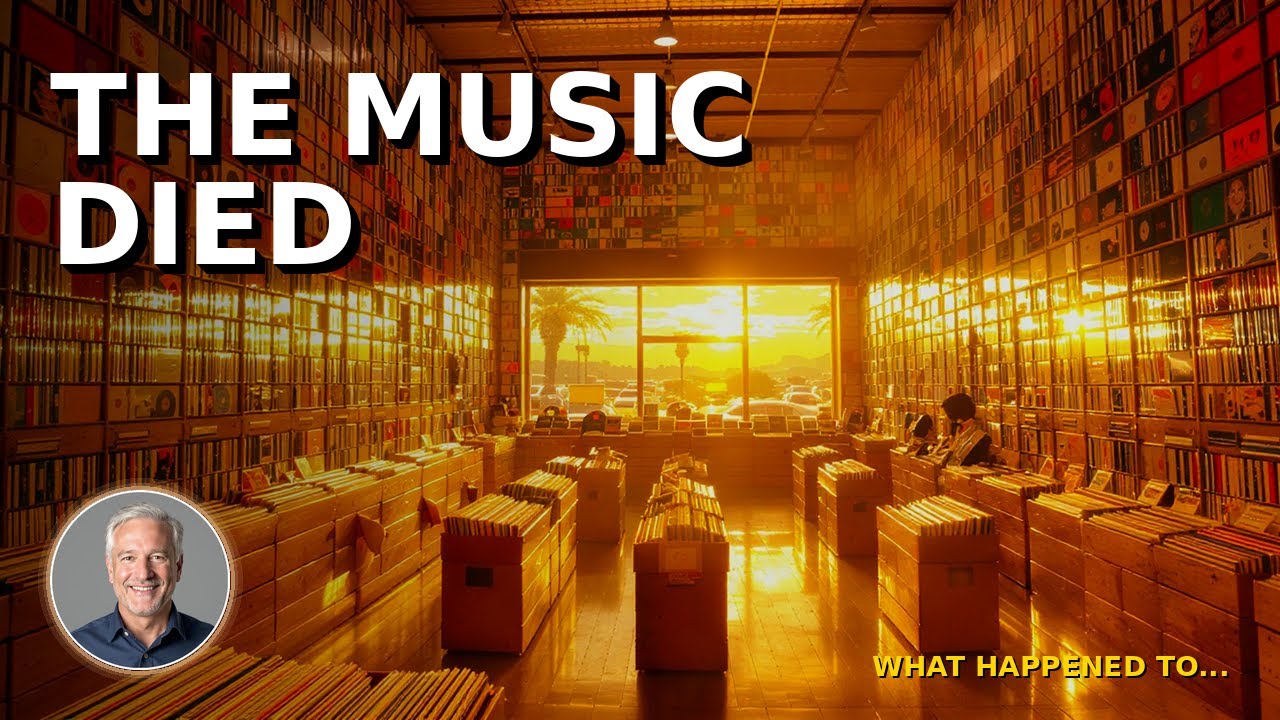
The Rise and Fall of Tower Records: How Digital Disruption Destroyed Music Retail’s Billion-Dollar Giant
In 2004, Tower Records operated 214 stores across 15 countries, generating over one billion dollars in annual revenue. By 2006, the company filed for bankruptcy and closed forever. The culprit wasn’t a recession, natural disaster, or corporate scandal—it was a small piece of software called Napster that fundamentally changed how people consumed music.
The collapse of Tower Records represents one of the most dramatic examples of digital disruption in retail history, predating similar upheavals in bookstores, video rental chains, and department stores. Yet the story of Tower Records is more than just another cautionary tale about technological change. It’s the story of how a single record store in Sacramento became a global cultural institution, and how quickly even the mightiest retail empires can crumble when the ground shifts beneath them.
From Sacramento Drug Store to Cultural Institution
The Tower Records story begins in 1960 with Russell Solomon, a 16-year-old working in his father’s Sacramento pharmacy. Solomon convinced his father to let him sell used records in a corner of Tower Drugs, named for the nearby Tower Theatre. What started as a small rack of secondhand albums would eventually grow into the world’s largest independent record retailer.
Solomon’s genius wasn’t in selling music—it was in understanding music culture. Unlike department stores that treated records as commodities, Solomon created spaces where music discovery was the primary experience. Tower Records stores became temples to musical exploration, with knowledgeable staff, extensive catalogs, and midnight release parties that drew thousands of fans.
By 1970, Solomon had opened his first standalone Tower Records location on the Sunset Strip in West Hollywood. The store’s 24-hour operation, vast inventory, and countercultural atmosphere made it a magnet for musicians, industry executives, and music fanatics. Elton John famously spent $40,000 in a single shopping spree, while countless artists treated Tower Records as their personal music library.
The Golden Age of Music Retail
The 1980s and 1990s represented Tower Records’ golden age, coinciding with two technological revolutions that initially boosted rather than threatened the company. The introduction of compact discs in 1982 created a massive replacement market, as consumers repurchased their favorite albums in digital format. Meanwhile, MTV’s cultural dominance drove music consumption to unprecedented heights.
Tower Records expanded aggressively during this period, opening flagship stores in major cities worldwide. The chain’s East Village location in New York became as much a tourist destination as a retail store, while the Shibuya flagship in Tokyo spanned multiple floors and attracted millions of visitors annually.
Stan Goman, who joined Tower Records in 1971 and eventually became president, oversaw much of this expansion. Under his leadership, Tower developed innovative merchandising strategies, including extensive listening stations and in-store performances that enhanced the shopping experience. The company’s “No Music, No Life” slogan, introduced in Japan, perfectly captured Tower’s positioning as more than a retailer—it was a lifestyle brand for serious music lovers.
Revenue growth seemed unstoppable. In 1999, Tower Records generated $1.1 billion in sales, making it one of the largest music retailers in the world. The company employed over 10,000 people and maintained a catalog of over 300,000 titles across all genres and formats. For many music fans, Tower Records wasn’t just a store—it was cultural infrastructure as essential as concert venues or radio stations.
The Napster Revolution Changes Everything
On June 1, 1999, college dropout Shawn Fanning released Napster, a peer-to-peer file-sharing application that allowed users to share MP3 files directly. Within two years, Napster had 80 million registered users and facilitated billions of song downloads. The music industry’s response was swift and aggressive, with major labels filing lawsuits that ultimately shut down Napster in 2001. But the damage to traditional music retail was irreversible.
The impact on Tower Records was immediate and devastating. Album sales, which had grown consistently for decades, began declining sharply in 2000. The Recording Industry Association of America reported that CD sales dropped 31% between 2000 and 2003, while digital piracy exploded across college campuses and beyond.
Unlike previous technological transitions that had benefited Tower Records, digital distribution bypassed physical retailers entirely. The company’s vast inventory and prime real estate locations—once competitive advantages—became expensive liabilities in an increasingly digital marketplace.
Tower Records attempted to adapt, launching an online store and experimenting with digital download services. However, these efforts were too little, too late. The company lacked the technical expertise and startup mentality necessary to compete in the digital space. Apple’s iTunes Store, launched in 2003, demonstrated how technology companies could more effectively monetize digital music than traditional retailers.
Financial Collapse and Cultural Loss
The transition from physical to digital music consumption accelerated throughout the early 2000s. Album sales continued declining while illegal file sharing became mainstream behavior, particularly among Tower Records’ core demographic of young music enthusiasts. The company’s financial situation deteriorated rapidly.
In February 2004, Tower Records filed for Chapter 11 bankruptcy protection, citing $80 million in debt. Despite attempts to restructure operations and close underperforming locations, the company couldn’t stem its losses. Digital music sales, while growing rapidly, generated far lower profit margins than physical CDs and couldn’t offset declining foot traffic.
On October 6, 2006, Tower Records filed for liquidation bankruptcy, permanently closing all 89 remaining U.S. locations. Going-out-of-business sales attracted thousands of customers, many experiencing their final visit to stores that had shaped their musical tastes for decades. The liquidation marked the end of an era in music retail and popular culture.
International operations survived temporarily under different ownership structures, with Tower Records Japan operating independently until 2020. However, the global brand that had once represented musical discovery and cultural exploration was effectively dead.
The Broader Pattern of Digital Disruption
Tower Records’ collapse foreshadowed similar disruptions across multiple industries. The same forces that destroyed music retail—digital distribution, changing consumer behavior, and reduced physical media demand—would later impact bookstores (Borders), video rental chains (Blockbuster), and countless other retailers.
The company’s story illustrates how quickly established business models can become obsolete when fundamental technologies change. Tower Records possessed strong brand recognition, loyal customers, and industry expertise, yet these advantages proved insufficient against the structural shift to digital consumption.
Modern streaming services like Spotify and Apple Music have largely solved the music industry’s piracy problems through convenient, affordable subscription models. However, the cultural function that Tower Records served—as a physical space for musical discovery and community—remains largely unfulfilled in the digital age.
Independent record stores have experienced a modest revival in recent years, driven by vinyl record collecting and nostalgia for physical media experiences. Yet these smaller retailers operate in niche markets rather than serving as mainstream cultural institutions. The democratization of music discovery through algorithms and social media has replaced the curatorial role that Tower Records employees once provided.
Legacy of a Music Retail Giant
The Tower Records story serves as both a cautionary tale about technological disruption and a reminder of what we lose when digital efficiency replaces physical cultural spaces. While streaming services offer unprecedented access to music, they cannot replicate the serendipitous discovery that occurred when browsing Tower Records’ vast physical inventory.
Russell Solomon, who built Tower Records from a corner of his father’s pharmacy into a global empire, witnessed the complete lifecycle of physical music retail. His creation survived format transitions from vinyl to cassette to CD, but couldn’t adapt to the fundamental shift toward digital distribution. The speed of Tower Records’ collapse—from billion-dollar revenue to bankruptcy in just six years—demonstrates how quickly even dominant companies can fall when industries transform.
Today’s retailers face similar challenges as e-commerce, artificial intelligence, and changing consumer behaviors continue reshaping commerce. The Tower Records legacy suggests that survival requires more than operational excellence or customer loyalty—it demands the ability to reinvent fundamental business models before disruption makes such reinvention impossible.